Why 9 in 10 People Say Incontinence Affects Their Mental Health

Key Takeaways
-
Incontinence affects more than bladder control — it can impact confidence, relationships, sleep, work, social life, and emotional well-being, and nearly 90% of people living with it report feeling depressed, isolated, or hopeless as a result.¹
-
The emotional burden often comes from constant anticipation. Many people quietly change routines, avoid activities, or withdraw socially because of anxiety about leaks, odor, or restroom access.
-
Reliable protection, open conversations, and practical support can reduce the mental load. Even one conversation with a trusted person or healthcare provider can begin to ease feelings of isolation.
-
Support is available. The NorthShore Hero Club™ consists of people living with incontinence sharing real stories, the free Talking About Incontinence eBook offers practical guidance, and NorthShore Care Experts provide personalized, judgment-free support seven days a week.
The Number That Puts It Into Words
A recent National Association for Continence (NAFC) survey found that nearly 90% of respondents reported feeling depressed, isolated, or hopeless because of incontinence.¹
That statistic captures something many people already know from experience: incontinence affects far more than bladder control. Over time, it can influence confidence, relationships, sleep, work, travel, and emotional well-being in ways that are rarely visible to the people around them.
For some people, the impact begins quietly — a little more anxiety before a long drive, hesitation about wearing light-colored clothing, or growing awareness of where restrooms are in unfamiliar places. For others, the emotional effects gradually become more significant as everyday decisions start revolving around the possibility of leaks.
Why Incontinence Can Feel Emotionally Exhausting
One of the hardest parts of managing incontinence is the constant mental effort that often goes unnoticed by everyone else.
Many people spend part of every day quietly thinking about:
-
Whether protection will last through a meeting or appointment
-
Whether urgency will strike during traffic or while traveling
-
Whether overnight leaks will interrupt sleep
-
Whether protection needs to be changed before leaving home
-
Whether odor is noticeable to others
-
How quickly a restroom can be reached
-
Whether coughing, lifting, laughing, or exercise could trigger leaks
-
Whether a change of clothing should be packed just in case
That ongoing mental checklist can become exhausting — particularly for people managing Heavy Bladder Leaks (HBL), bowel urgency, mobility limitations, chronic illnesses, or unpredictable symptoms. Even when leaks are well managed, the anticipation alone creates a level of stress that most people around them never see.
How Leaks Can Change Daily Life
The emotional effects of incontinence often develop gradually rather than all at once.
Invitations that once felt easy to accept begin to feel complicated. Exercise in public becomes uncomfortable. Long outings where restroom access feels uncertain start to feel more stressful than enjoyable.
Over time, some people stop volunteering to carpool because they want control over bathroom stops. Overnight visits with family become less frequent. Dating feels more complicated. Sitting through a movie, sporting event, or long dinner becomes something to calculate rather than simply enjoy.
Others wake repeatedly throughout the night — not necessarily because protection needs changing immediately, but because of anxiety about the possibility of leaks. That constant vigilance can wear people down emotionally, even when nobody else realizes it's happening.
Because many people work hard to keep their symptoms private, loved ones often have no idea how much planning, monitoring, and emotional energy goes into simply getting through an ordinary day.
The Emotional Gap Between Managing and Actually Coping
Many adults become remarkably skilled at adapting to incontinence long before they feel emotionally supported in managing it.
Someone may carry extra clothing everywhere, map out restroom locations before leaving home, or structure an entire workday around bathroom access — all while insisting everything is fine.
Others continue using protection that doesn't meet their needs because switching to a higher-absorbency product feels like admitting symptoms have become more serious. This is especially common among people who associate adult diapers with aging, loss of independence, or visible illness.
But when leaks continue despite those efforts, the emotional burden often grows. Repeated accidents on clothing, bedding, furniture, or car seats can reinforce anxiety — making participation in activities people once enjoyed feel even less realistic.
Recognizing that emotional toll is an important step toward finding solutions that improve both physical comfort and peace of mind.
Why Better Protection Can Reduce Emotional Stress
When high-performance incontinence protection performs consistently, the questions that run on a constant loop begin to fade. Reliable absorbency reduces the mental effort spent planning around leaks — allowing more attention to go toward work, family, hobbies, travel, and everyday life.
No product eliminates the emotional impact of incontinence entirely. But dependable protection can meaningfully reduce one of its biggest daily sources of stress: uncertainty.
For people managing HBL, overnight wettings, or larger bladder voids, products designed specifically for higher absorbency make a real difference.
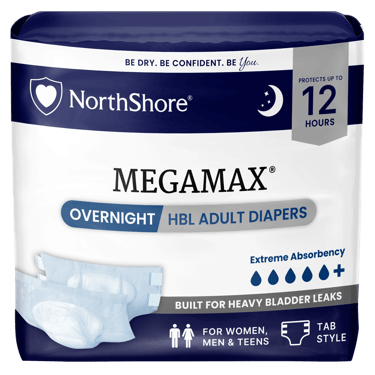
NorthShore MegaMax® tab-style adult diapers are designed for maximum absorbency and extended wear of up to 12 hours*, with MVP™ (Multi-Void Protection) technology that handles multiple wettings while keeping skin dry. The durable backing provides strong leak protection during overnight use or long stretches away from home.
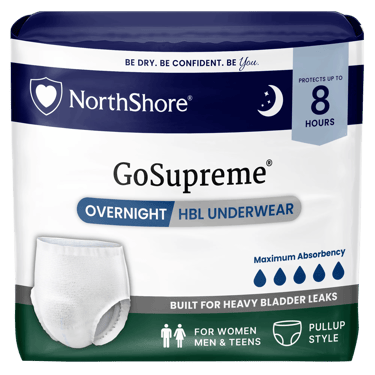
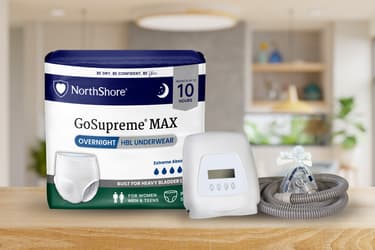
For active days when an underwear-like fit matters while still managing heavier leaks confidently, GoSupreme® pull-up style underwear is a strong option with up to 8 hours* of protection and tear-away side seams for easy removal.
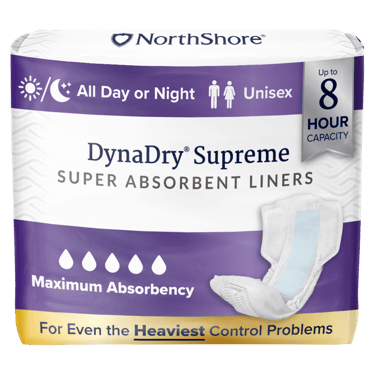
For lighter bladder or bowel leaks, DynaDry® Supreme Unisex Liners provide discreet pad-style protection worn inside regular underwear.
When protection works the way it's supposed to, something shifts. The mental tracking quiets. There's more room to simply be present in the day.
*An immediate change is required after a bowel movement.
Why Shame Around Incontinence Still Exists
Despite affecting millions of adults, incontinence is still surrounded by stigma. Many people associate bladder or bowel leaks with aging, helplessness, or loss of independence — even though incontinence can occur at almost any stage of life and for a wide range of reasons.
In reality, incontinence affects people from many different circumstances:
-
Athletes
-
College students
-
Working professionals
-
Parents
-
Menopause-aged adults
-
People recovering from surgery
-
Young adults with chronic illnesses
-
Wheelchair users
-
People with neurological conditions
-
Caregivers
Incontinence is very common, often treatable, and always manageable. Emotional isolation grows strongest when people believe they're the only ones experiencing it — and that belief is rarely true.
What Support Can Actually Look Like
Support doesn't always begin with a major conversation or dramatic life change.
Sometimes it's a healthcare provider who listens without judgment. A partner who responds calmly after a leak. A friend who offers reassurance instead of embarrassment. Finding protection that finally works consistently. Sleeping through the night without worrying about bedding. Feeling more comfortable during travel or a social event.
Practical tools can help too. Keeping a bladder and bowel diary often reveals patterns that make healthcare conversations more productive. Pelvic floor physical therapy, medication, lifestyle changes, or other treatments may also improve symptoms depending on the underlying cause. NorthShore's free Bladder & Bowel Diary is a simple starting point.
Support looks different for everyone — but it often starts with recognizing that managing incontinence doesn't have to happen alone.
Talking About It Is Often the Hardest Part — and the Most Important One
Many people wait years before telling anyone about their experience with incontinence. According to the NAFC, the average person waits more than six years before discussing bladder symptoms with a healthcare provider.² That's a long time to carry something that affects daily life so deeply.
The free Talking About Incontinence eBook from NorthShore was built specifically for this moment. It offers practical guidance for starting conversations with healthcare providers, partners, family members, friends, and caregivers — with conversation starters, communication tips, and real-world advice designed to make those discussions feel more manageable.
Even one conversation can begin to reduce the emotional burden of managing incontinence alone.
Download the free eBook at northshorecare.com.
Real Stories From People Who Understand
The NorthShore Hero Club™ is a community of customers and caregivers who have chosen to share their experiences openly — so the next person feels less alone.
Stories from people managing HBL, overnight leaks, neurological conditions, postpartum changes, caregiving responsibilities, and everything in between offer encouragement, practical insights, and reassurance that others have faced similar challenges.
Read their stories — or share one — at northshorecare.com/hero-club.
Confidence Returns One Step at a Time
For many people, rebuilding confidence happens gradually rather than all at once.
It may begin with sleeping through the night without waking in worry. Taking a long walk without thinking about restroom access.
Accepting an invitation that might have been declined months earlier. Spending time with friends while focusing on the conversation instead of the possibility of leaks.
Those moments may seem small. They represent meaningful progress.
Reliable protection, supportive conversations, and trusted guidance can help reduce isolation and restore confidence over time.
NorthShore Care Experts are available by call, text, or chat seven days a week to provide personalized, judgment-free guidance — helping match products to absorbency needs, overnight routines, mobility concerns, and lifestyle preferences. They can also help place a free sample order directly (just pay for shipping).
Frequently Asked Questions
Can incontinence affect mental health?
Yes. According to a survey by the National Association for Continence, nearly 90% of people living with incontinence report feeling depressed, isolated, or hopeless as a result.¹ Anxiety, sleep disruption, reduced confidence, and social withdrawal are all widely reported effects..
Why do people feel isolated when managing incontinence?
Many adults avoid talking openly about bladder or bowel leaks because of stigma, fear of judgment, or concern about how others might perceive them. That silence can make a very common experience feel entirely solitary — and it often persists for years before anyone seeks support.
Can better incontinence products help reduce stress?
Reliable absorbency and leak protection can meaningfully reduce the mental load of constant monitoring — helping people feel more confident during sleep, travel, work, exercise, and social activities. When protection works consistently, it frees up mental and emotional energy for everything else.
What products are designed for Heavy Bladder Leaks?
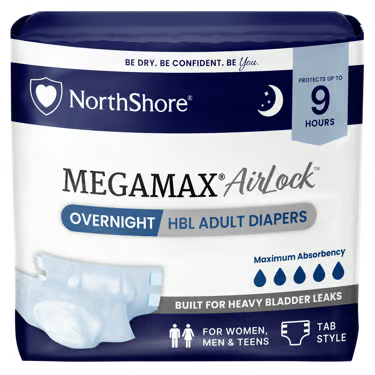
NorthShore MegaMax® tab-style adult diapers and GoSupreme® pull-up style underwear are both designed specifically for HBL and multiple wettings. DynaDry® Supreme Liners offer a pad-style option for lighter days. NorthShore's Sample Program and Care Experts can help find the right fit.
Where can real stories from people managing incontinence be found?
The NorthShore Hero Club at northshorecare.com/hero-club is a community of customers and caregivers who have shared their experiences openly — covering a wide range of conditions, ages, and life situations.
Sources
Products Mentioned In This Article
More Helpful Tips & Resources


About NorthShore Care Supply
Founded in 2002, NorthShore Care Supply helps individuals and caregivers find the right protection for heavier leaks, overnight needs, and daily confidence. As the maker of NorthShore® Adult Diapers, we lead in high-performance protection for Heavy Bladder Leaks (HBL) and support #EndHealthStigma. Our expert Customer Care team provides private, compassionate guidance to help people choose products that fit their needs and lifestyle. Follow us on LinkedIn and Facebook @NorthShoreCareSupply, Twitter, Instagram and TikTok @NorthShoreCare.
Access your List
Connect on social:


