“Incontinence Doesn’t Define Me”: The Marathon Runner and Navy Veteran Who Refuses to Let Incontinence Win

Key Takeaways
-
Steve is a Navy veteran, dad, and marathon runner from Nebraska who has completed seven marathons while managing urge incontinence.
-
Steve spent years feeling ashamed and hiding his symptoms before finding the right products, working with his doctors, and deciding to share his experience openly.
-
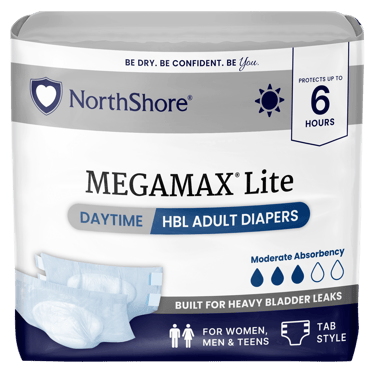
NorthShore MegaMax® Lite played a direct role in Steve's best marathon finish in years — and this summer, he'll represent NorthShore at the North Shore RunFest 5K/8K in Salem, Massachusetts.
-
Steve's message: "There's no shame in protection. It's just gear, the same as good shoes or a GPS watch."
Steve shares his story
My name is Steve. I'm a dad, Navy veteran, marathon runner, and content creator from Nebraska. Running is one of the biggest parts of my life, and I've completed seven marathons so far.
I also live with urge incontinence. It took me a long time to understand it, accept it, and talk about it openly. For years I felt embarrassed and tried to manage it privately. Over time I learned that incontinence is a medical issue, not a personal failure.
Being asked to represent NorthShore at the North Shore RunFest in Salem, Massachusetts is a huge honor. I'm genuinely excited for another race, and I'm proud to represent a company whose products help people like me stay active and confident.
Early Signs
The first sign I remember was bedwetting in my late 20s. At the time I was still Active Duty in the Navy, and I was deeply embarrassed by it. I didn't tell anyone — not even Navy medical.
Looking back, I wish I had brought it up while I was still serving, or with a civilian doctor after I got out. But I felt ashamed and kept it to myself for years.
Back then I did not understand that bedwetting could be a sign of something medical. I treated it like something embarrassing that I needed to hide.
Progression of Symptoms
Over time the bedwetting became an almost nightly thing. I was also drinking more in those years, so I blamed the alcohol and figured that was the problem.
In my early 30s I started focusing more on my health. I began going to the gym, running, partying less, and drinking much less. But even after all those changes, the nightly bedwetting continued.
Eventually my ex encouraged me to talk about it, and we landed on diapers as a practical way to manage the bedwetting at night.
Around that same time I also started having daytime accidents. At first they seemed to happen mostly when I was drinking, which gave me one more reason to blame alcohol. But even after cutting back, the daytime accidents kept happening.
So I started planning my day around bathroom access. I'm a software developer, so naturally I turned it into a logistics problem: I knew where every restroom was between my house and just about anywhere I regularly went. When I was out, I'd get very little warning, rush to find a bathroom, and sometimes end up with wet pants when there wasn't one close enough.
I could still use the toilet normally, so I built routines around that. Empty the bladder before leaving the house, then put on protection before heading out. It's the same advice you'd give a kid, sure, but plenty of grown adults run the exact same playbook so they can keep showing up for their lives. I'm one of them.
At first I wore pull-ups during the day, but eventually they weren't enough. When I had an accident, it usually wasn't a small leak. It was often a full wetting accident. So I transitioned to wearing diapers whenever I was away from the house.
Diagnosis and Medical Care
In my mid-30s, my urologist formally diagnosed me with urge incontinence. Testing showed that my bladder could fill and hold, but I often couldn't feel that it was full until the very last minute. If I wasn't already close to a bathroom, I usually didn't have enough warning to avoid an accident.
Over the years I've tried multiple medications and gone through testing for several possible contributing factors, including sleep, mental health, stress, anxiety, and other possible underlying conditions. Those tests were all negative.
I'm still working with my doctors today. The latest suspicion is that nerve or sensory issues may be affecting how my bladder signals fullness. That fits what I experience: the bladder fills, but I often don't feel the need to go until it's urgent.
For me, protection isn't a replacement for medical care. It's part of how I manage daily life while I keep working with my doctors.
Finding Products That Worked
I've tried a lot of different incontinence products from a lot of different companies. It took real trial and error to find what worked for my body, my symptoms, and my lifestyle.
Pull-ups weren't enough for my symptoms, especially when I was away from home, overnight, traveling, or anywhere I couldn't get to a bathroom quickly. I needed protection that could handle real accidents, not just small leaks.
Finding reliable products made a huge difference. The right protection gave me confidence, cut down the stress, and let me focus on living my life instead of constantly scanning for the nearest bathroom.
Running and Incontinence
Running is one of the most important parts of my life, and incontinence could have easily become a reason to quit. Instead, I learned how to manage it around training and racing.
For long runs and races, I plan ahead. I think about hydration, bathroom access, what protection I need before the start, and when I might be able to change or discard it during the event.
A recent example was my last marathon. I wore a plastic-backed MegaMax® the morning of the race. It saved me twice before the start and once more in the first few miles — which honestly makes it the MVP of my race-day kit. Around mile 5, I was able to discard it in a port-a-potty and keep going. After that, I stopped every 5 or 6 miles to stay ahead of any issues.
I finished in 3 hours and 57 minutes — my best marathon since I started over a few years ago, and one I'm really proud of. Incontinence was manageable because I planned for it. It didn't stop me from finishing, hitting that time, or putting in the training that got me there.
Why the North Shore RunFest Matters to Me
Being asked to run the North Shore RunFest representing NorthShore means a lot to me. I'm honored, I'm excited, and honestly I'm just really proud to be part of it.
NorthShore products have helped me stay active, train, race, travel, work, and live my life with more confidence. Representing them at a race feels like a perfect connection between two big parts of my life: managing incontinence and staying active through running.
For me, this race is about more than crossing another finish line. It's a chance to show that incontinence doesn't have to stop someone from being active, visible, confident, and fully involved in life.
A Message I'd Like to Share
Living with incontinence can feel isolating, especially at first. It's easy to feel embarrassed, or to think you're the only one dealing with it. I spent years feeling ashamed and trying to hide it.
But finding the right products, working with my doctors, and being more honest about my experience changed everything.
And here's the thing I want people to hear: diapers aren't just for little kids. Plenty of adults wear them and still live full, active lives. I train for marathons in them. There's no shame in protection. It's just gear, the same as good shoes or a GPS watch.
Protection gives me freedom. It helps me leave the house, go to work, spend time with friends, train for marathons, travel, and show up for my life with more confidence.
Incontinence is part of my story, but it's not what defines me.
| Thank you for reading our customer stories. NorthShore works to remove the confusion and isolation surrounding incontinence, helping individuals better understand that “incontinence is very common, often treatable, and regardless, very manageable.” — Adam Greenberg, President & Founder of NorthShore We are grateful for the opportunity to share these journeys and provide products that help people live life to the fullest. Learn more about sharing your story through the NorthShore Hero Club. Have a story to share? Submit it below to help others feel less alone. |
Products Mentioned In This Article
More Helpful Tips & Resources



About NorthShore Care Supply
Founded in 2002, NorthShore Care Supply helps individuals and caregivers find the right protection for heavier leaks, overnight needs, and daily confidence. As the maker of NorthShore® Adult Diapers, we lead in high-performance protection for Heavy Bladder Leaks (HBL) and support #EndHealthStigma. Our expert Customer Care team provides private, compassionate guidance to help people choose products that fit their needs and lifestyle. Follow us on LinkedIn and Facebook @NorthShoreCareSupply, Twitter, Instagram and TikTok @NorthShoreCare.
Access your List
Connect on social:


