Unintentional Yeses: The Routines That Develop When Leaks Start Shaping the Day

Key Takeaways
-
When protection requires frequent changes or backup plans, managing leaks can start to influence where someone goes, how long they stay, and how well they sleep.
-
Routines like choosing an aisle seat, setting a nighttime alarm, or carrying a spare outfit can gradually become ways of working around unreliable incontinence protection.
-
Heavy bladder leaks require protection designed to handle larger volumes, rather than products designed primarily for lighter leaks.
-
With protection that better fits the needs being managed, some routines built around the fear of leaks may no longer be necessary, making room to take back choices that had quietly disappeared from the day.
There are things we choose to say yes to, and then there are the things we agree to because they make the rest of the day easier to manage.
Think about the routines that have crept in over time. Leaving a little earlier than everyone else, thinking twice before accepting an invitation, or keeping a change of clothes in the car. Each of those decisions started as a practical solution to a real problem.
These are the unintentional yeses. They’re the routines, compromises, and workarounds that were never consciously chosen, but quietly became part of the day when unreliable protection made ordinary activities harder. Once those “choices” become background noise, it can be difficult to realize just how much of the day has been built around managing leaks.
The Everyday Adjustments Made to Manage Incontinence
It often begins the same way. An inconvenient leak can be enough to make someone rethink how they approach the next outing. So next time, they are more careful. Extra supplies get packed, and the outings themselves get shorter because the alternative feels too risky to test. What starts as being careful can quietly become just one more thing to manage.
When someone is not confident protection can keep up, planning ahead can feel like the safest option. Always booking the aisle seat may seem like a small thing. Nobody notices, and it seems like it costs nothing. But a few months later, it may no longer feel like a choice at all. Sitting in the middle of a row now feels like taking a risk.
Nights can get the same treatment. If someone has learned that sleeping straight through means waking up wet, setting an alarm for a 2 am change can feel like a small price to pay. The person may wake up dry, but they’re exhausted anyway.
One extra precaution might not seem like much. But when someone is always planning around the next leak, those precautions begin to shape where they go, how long they stay, when they sleep, and what they feel comfortable doing.
When Coping With Leaks Becomes a Way of Life
Once these adjustments become routine, the mental math behind them can become just as automatic. Before the outfit is even picked out, someone may already be thinking about the bathroom. Is it close to the table? Will there be a wait? What happens if the meal runs longer than expected? Will a change be needed, and what happens if something goes wrong before then? Part of the evening is already being spent managing the possibility of a leak before it has even started.
That bathroom mapping has a cost. It can mean half following a conversation while watching the clock, leaving dinner earlier than planned, or deciding not to go at all. Add the broken sleep and tired mornings that come with it, and a life can start to feel smaller without any single moment to point to.
If every product a person tried needed changing every few hours, it makes sense that they would build a routine around those changes. There is no shame in strategies that helped someone avoid leaks, stay prepared, and feel more in control.
But there is a difference between choosing a routine because it works for someone and following a routine because they have learned they have to.
Saying yes to life sounds so simple. But for someone managing incontinence, it can be harder to feel excited about new experiences when so much of the day is already shaped by things they never meant to agree to in the first place.
Those routines aren't a personal failing. They often develop because the protection was never designed to handle the leaks it's being asked to manage.
What If the Product Is the Problem?
Look at those routines again and notice how many of them exist to cover for protection that can't keep up. From the 2 am alarm to the spare outfit in the car, these are just ways of working around a product that was never designed for the leaks being managed.
What's the Difference Between Light and Heavy Bladder Leaks?
Not all bladder leaks are the same. LBL (Light Bladder Leaks) are typically small, occasional leaks, such as a few drops or dribbles after coughing or sneezing. HBL (Heavy Bladder Leaks) involve larger volumes and more frequent episodes, sometimes including multiple full bladder releases throughout the day or night.
That difference matters when choosing incontinence protection. Most store-brand products are designed around lighter leaks, so they may require more frequent changes or backup plans when handling larger volumes. Protection built for HBL is a different category altogether.
A product built for drips has limits, and heavy leaks can reach them quickly. Over time, those product limitations quietly influence a person’s routine. The alarm, the spare outfit, and the constant bathroom planning may have less to do with the person managing the leaks than with the protection they have been relying on. The right protection has the power to change what the whole day looks like.
Incontinence Protection Can Keep Up with Life
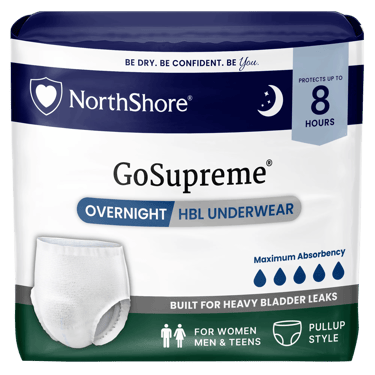
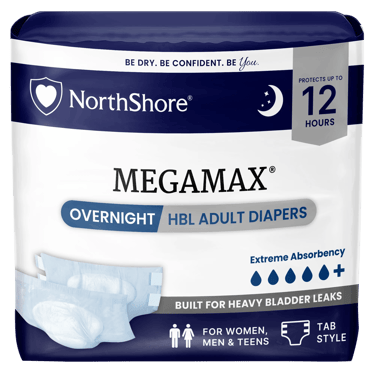
NorthShore builds protection for heavy leaks by approaching the problem differently. MVP™ (Multi-Void Protection) is designed to help keep skin dry through 2-4 bladder releases. That technology is built into both MegaMax® and GoSupreme®, providing options based on what the day requires. MegaMax is NorthShore’s flagship adult tab-diaper, designed for extended stretches and overnight use, while GoSupreme is designed for nights or active days in a pull-up style. Instead of asking someone to build a routine around the limitations of the product, NorthShore built protection that can handle more of what a day may actually involve.
The difference shows up in the number of changes, too. Store brands average about 10 changes a day, compared with about three for NorthShore. Fewer changes can mean fewer interruptions, especially during a long outing or a busy day.
For someone who has spent years planning every outing around the possibility of a leak, that flexibility means more than using fewer products. It can mean less time thinking about when the next change will be needed, where the nearest bathroom is, or whether the protection will hold up. It creates more mental space for everything else the day has in store.
That doesn’t mean leaks will never require planning. Some planning will always be part of life. The goal is having protection that does the job it was meant to do so that planning can center on the day itself, rather than on everything that might go wrong.
When protection is no longer the source of uncertainty, some of those routines built around the fear of leaks may no longer be necessary. And that can make room to take back some of those choices that had quietly disappeared from the day.
For anyone who isn’t sure where to start, the NorthShore Product Finder can help narrow down the options. NorthShore Care Experts are also available seven days a week to talk through what may work best and offer judgment-free guidance to anyone still deciding which type of protection makes sense.
Make Room for the Yeses That Matter
Think about those little decisions that can become part of the routine over time. The backup clothes. The bathroom mapping. The alarm in the wee hours of the morning.
There was a reason for each one. They started as reasonable ways to cope with a situation that felt unpredictable or out of control. Each unintentional yes helped someone get through days when their protection couldn't keep up with their needs, and there is no reason they should feel bad about the ways they adapted in order to get by.
But adapting doesn’t mean someone has to live that way forever.
With protection that better fits individual needs, some of those routines can become choices again. Someone might still choose the aisle seat simply because they like having the extra space. But one night, the alarm gets skipped, and they wake up at 7 am wondering where the night went. Freedom is not about trying to fill every slot on the calendar or pretending leaks will never cross someone's mind again. It's about making room for a day that isn't shaped by every precaution, backup plan, or workaround.
Not every "yes" that became part of a routine was a conscious or intended choice. But with the right protection, there is more room for the yeses that matter.
Frequently Asked Questions
How can incontinence affect daily routines?
Managing leaks can lead to routines such as planning around bathroom access, choosing certain seats, carrying spare clothes, or setting alarms for nighttime changes. Over time, these precautions can influence where someone goes, how long they stay, when they sleep, and what they feel comfortable doing.
What is the difference between light and heavy bladder leaks?
Light bladder leaks (LBL) are typically smaller, occasional leaks, such as a few drops or dribbles. Heavy bladder leaks (HBL) involve larger volumes and may include multiple full bladder releases throughout the day or night.
What is MVP™ (Multi-Void Protection)?
MVP™ is NorthShore’s absorbency technology designed to manage multiple full bladder releases while helping keep skin dry. In MegaMax®, the oversized absorbent core quickly wicks away fluid and is designed to keep skin dry through two to three full bladder releases. It can help reduce the need to build frequent product changes into the day when managing heavy bladder leaks.
Can better incontinence protection really mean fewer changes and less planning?
It can. NorthShore products average about three changes a day, compared with about 10 for store brands. For someone managing heavy bladder leaks, fewer changes can mean less time thinking about when the next change will be needed, where the nearest bathroom is, or whether protection will hold up during a long outing or overnight.
Products Mentioned In This Article
More Helpful Tips & Resources


About NorthShore Care Supply
Founded in 2002, NorthShore Care Supply helps individuals and caregivers find the right protection for heavier leaks, overnight needs, and daily confidence. As the maker of NorthShore® Adult Diapers, we lead in high-performance protection for Heavy Bladder Leaks (HBL) and support #EndHealthStigma. Our expert Customer Care team provides private, compassionate guidance to help people choose products that fit their needs and lifestyle. Follow us on LinkedIn and Facebook @NorthShoreCareSupply, Twitter, Instagram and TikTok @NorthShoreCare.
Access your List
Connect on social:


