Strength Training With Incontinence: What's Safe and What to Adjust
Key Takeaways
-
Research does not show that regular strength training causes incontinence, but heavy lifts, breath-holding, and high-impact movements raise pressure on the bladder and pelvic floor.
-
Leaks during workouts are often linked to bracing, impact, and fatigue, so adjusting breathing, load, tempo, and exercise order can help many people keep training.
-
A pelvic floor physical therapist can help pinpoint which movements trigger leaks and build a plan that keeps strength training in the routine.
-
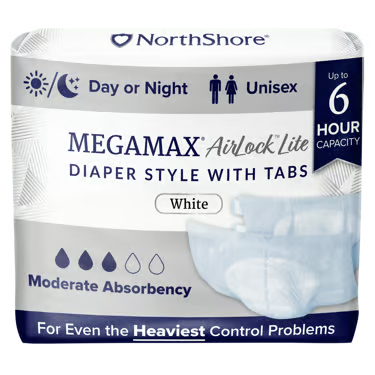
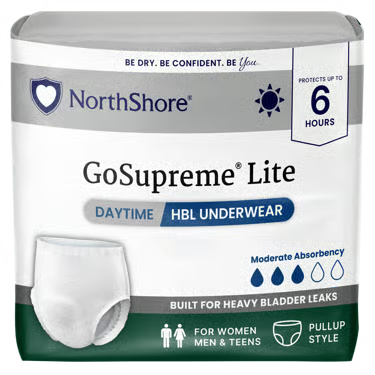
Lower-bulk protection built for Heavy Bladder Leaks (HBL), like breathable GoSupreme® Lite pull-up style underwear or MegaMax® Lite tab-style adult diapers, moves with the body through squats and floor work and keeps attention on the lift instead of on leaks.
Strength training is supposed to feel empowering. Building muscle, improving balance, getting stronger after an illness or surgery, or simply carrying groceries with less effort are all goals worth protecting.
Leaks at the gym can make training feel stressful instead. Some people notice drips during squats. Others feel sudden urgency during deadlifts, kettlebell swings, or core work, and for some, leaks only show up once fatigue sets in late in a session. That unpredictability leads many people to quietly stop lifting altogether.
Stopping is rarely the only option. Incontinence is very common, often treatable, and regardless, can be very manageable. Leaks during lifting are usually less about exercise itself and more about how pressure moves through the body during specific movements, and breathing, exercise selection, pacing, and protection all play a part.
Is Strength Training Safe With Incontinence?
For most people, the research is reassuring. In a randomized controlled trial of previously inactive women with a BMI over 25, 12 weeks of strength training produced no statistically significant change in urinary incontinence.¹
Leaks during exercise are still common, especially with high-impact training. A meta-analysis found that 36% of female athletes across different sports reported urinary incontinence, and athletes had a 177% higher risk than sedentary women. Researchers point to the increased abdominal pressure that high-impact exercise generates.²
Leaks during a workout do not mean someone is out of shape or doing something wrong. They are a signal about pressure, and pressure can be managed. Anyone with new symptoms, pelvic pain, or a recent surgery should check with a healthcare provider before returning to heavy lifting.
How Can Lifting Weights Cause Bladder Leaks?
Every lift changes the pressure inside the abdomen. Bracing the core, holding the breath, and pushing hard against a load all drive pressure down toward the pelvic floor and bladder. A systematic review of resistance exercise found that body position and load together determine how high that pressure climbs, with heavy squats, deadlifts, and cleans among the highest-pressure lifts.³
When the pelvic floor can't fully counter that pressure, leaks can happen during the lift or during transitions between movements. That can look like stress incontinence during exertion, sudden urgency mid-session, or small leaks that grow larger as fatigue builds.
Several factors affect how the pelvic floor responds. Cleveland Clinic lists pregnancy and childbirth, menopause, chronic cough, chronic constipation, higher body weight, and pelvic floor muscle weakness among the risk factors for stress incontinence.⁴ Research on female athletes also points to pelvic floor muscle fatigue and hypermobility as possible contributors.⁵
How to Breathe During Strength Training With Incontinence
Breath-holding is one of the most overlooked leak triggers. Many people instinctively hold their breath during squats, deadlifts, overhead presses, leg presses, and weighted carries. This bracing technique, called the Valsalva maneuver, raises abdominal pressure to stabilize the trunk, and it tends to kick in at very heavy loads, around 80% of a one-rep max and above.⁶
Abdominal pressure drops during exhalation, which is why pelvic floor physical therapists often teach exhaling through the hardest part of a lift.⁶ In practice, that looks like:
-
Exhaling while standing up from a squat
-
Exhaling during the push phase of a chest press or overhead press
-
Exhaling as the bar leaves the floor on a deadlift
Breath-holding is not off-limits. Powerlifters use it deliberately for stability during maximal lifts. For people managing leaks, saving it for the few heaviest sets, rather than bracing hard on every rep, is a practical middle ground.
Which Strength Exercises Are Most Likely to Cause Leaks?
Certain movements tend to create more pelvic pressure, especially under heavy load or once fatigue sets in.
Heavy Squats and Deadlifts
Deep squats and deadlifts under heavy load combine a standing position, a heavy bar, and hard bracing, which places them among the highest-pressure lifts in resistance training.³ Leaks are more likely near maximal effort, when breath-holding takes over.
Box Jumps, Jump Rope, and Plyometrics
Impact adds a different kind of pressure. Researchers have recorded abdominal pressure of about 171 mmHg during jumping, compared with about 108 mmHg during a standing cough and about 20 mmHg while simply standing.⁷ A meta-analysis of 4,823 women, most of them CrossFit practitioners, found a 44.5% prevalence of urinary incontinence, and jump-based exercises were commonly associated with leaks.⁸
High-Rep Core Circuits
Long sets of crunches, sit-ups, and planks held to exhaustion combine repeated abdominal effort with fatigue. Scaling these back, or moving them to a separate shorter session, is often an easy first adjustment.
Which Strength Exercises Put Less Pressure on the Bladder?
Tolerance varies from person to person, but supported positions, lighter loads, and no impact generally mean less sudden pressure. One study reported peak abdominal pressure of about 219 mmHg during heavy standing squats, compared with about 161 mmHg during leg presses at maximal effort.⁹ The systematic review on lifting pressure also recommends bench press and rowing movements as starting points for beginners.³
Options many people start with include:
-
Seated strength machines, including the leg press
-
Bench press and seated or chest-supported rows
-
Controlled dumbbell work
-
Glute bridges and hip thrusts
-
Resistance bands and cable exercises
-
Split squats or walking lunges with lighter weight at a controlled pace
-
Incline walking
Tempo matters too. Slower, controlled reps avoid the sharp pressure changes that come with explosive movement, and slowing down transitions can help some people keep challenging exercises in their program.
Is Core Strength Training Enough to Stop Leaks?
People who leak during workouts are often told to just strengthen the core. But abdominal strength and pelvic floor strength are not the same thing. People who have trouble contracting the pelvic floor may tighten the abdominals, glutes, or inner thighs instead, and those muscles can't support the pelvic organs or keep the bladder from descending when abdominal pressure rises.¹⁰
Targeted pelvic floor muscle training is different. In research summarized by NIDDK, women who received pelvic floor muscle training had fewer leaks per day than women who didn't, and a physical therapist trained in pelvic floor therapy can help people get the most out of those exercises.¹¹
More tension is not always better, either. Some people improve once they learn to relax certain muscles during movement instead of clenching everything on every rep.
Why Do Leaks Happen at the End of a Workout?
A workout that feels manageable at the start can feel very different by the final set, the walk back to the locker room, or while re-racking weights. Pelvic floor muscle fatigue is one of the contributors researchers link to leaks in athletes.⁵
Spotting that pattern makes it easier to plan around. Practical adjustments include putting the heaviest or most demanding lifts early in the session, adding rest between sets, finishing with lower-pressure accessory work, and saving high-rep core circuits for a separate, shorter session.
How to Manage Gym Anxiety About Leaks
For many people, the fear isn't the exercise. It's visibility: mirrors, fitted athletic clothing, shared benches, restrooms that aren't close by, and sweat that changes how products sit.
A few practical steps take some of that pressure off:
-
Choose darker or patterned bottoms, or wear a longer top over leggings
-
Find the nearest restroom before starting and set up floor work nearby
-
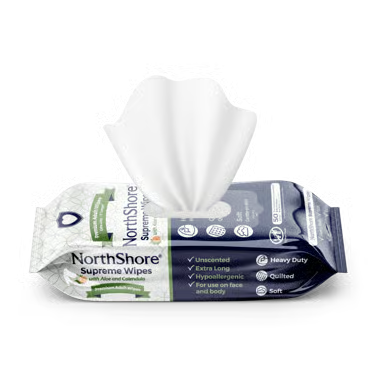
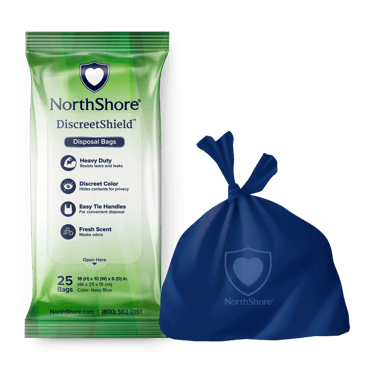
Keep a small kit in the gym bag with NorthShore® Supreme Quilted Wipes for quick cleanups, DiscreetShield™ disposal bags for discreet changes, and a spare set of clothes
-
Train at off-peak hours while building confidence with new movements
When protection feels secure, it becomes easier to stay for the full session and keep progressing.
What Are the Best Incontinence Products for Strength Training?
Strength training asks more of protection than a desk job does: squatting, bending, sweat, friction, and moving from standing to floor work, sometimes with multiple smaller leaks over a long session. When leaks break through mid-workout, the product may be the problem, not the lifter. Many store-brand products are designed for lighter leaks, and NorthShore is the only brand built specifically for heavy leaks.
Lighter, lower-bulk protection tends to work best for training, as long as it is still built for heavy leaks. For most gym sessions, NorthShore GoSupreme Lite pull-up style underwear is lightweight and breathable, with a soft, cloth-like material and built-in elastics that fit closer to the body and reduce bulk under workout clothes. It is designed for HBL and offers up to 6 hours* of protection.
For people who prefer tab-style protection, MegaMax Lite tab-style adult diapers deliver HBL protection without the bulk of an overnight diaper. Extra-tall dual leak guards help protect the leg openings during active movement, refastenable tape tabs make it easy to adjust the fit between sets, and MVP™ (Multi-Void Protection) technology is designed to handle multiple wettings for up to 6 hours*.
*An immediate change is required after a bowel movement.
Strength Training and Incontinence Can Coexist
Leaks don't have to end a strength routine. For some people, the answer is lighter weights for a while. For others, it's a new breathing pattern, a different exercise order, time with a pelvic floor physical therapist, or protection built for heavier leaks. Progress doesn't disappear because workouts look different for a while.
The NorthShore Sample Program makes it easy to test protection during a real workout before committing. Request up to 6 free samples, matched through a quick 4-question quiz. Orders placed by 7 pm Central ship the same day in discreet, unmarked boxes to addresses in the contiguous U.S., and shipping charges apply.
NorthShore's Care Experts are real people available by call, text, or chat, seven days a week. They offer judgment-free help matching protection to activity level, absorbency needs, and fit, and they can place a sample order directly.
Frequently Asked Questions
Is strength training bad for incontinence?
Not necessarily. In a randomized controlled trial, 12 weeks of strength training in previously inactive women produced no statistically significant change in urinary incontinence.¹ Heavy lifts, breath-holding, and impact do raise pressure on the pelvic floor, so adjusting breathing, load, and exercise selection helps many people keep training.
Why do leaks happen during squats or deadlifts?
Heavy squats and deadlifts are among the highest-pressure lifts in resistance training, especially with breath-holding near maximal effort.³ That pressure pushes down on the pelvic floor and bladder and can lead to stress incontinence during exertion.
What exercises trigger leaks most often?
High-impact and high-pressure movements, like heavy squats, deadlifts, box jumps, jump rope, and high-rep core circuits, are common triggers, especially once fatigue sets in. Jumping generates more abdominal pressure than a standing cough.⁷
Can pelvic floor exercises help with leaks during workouts?
Women who receive pelvic floor muscle training have fewer leaks per day than women who don't, according to research summarized by NIDDK.¹¹ General core work doesn't always train the pelvic floor, so guidance from a pelvic floor physical therapist can make those exercises more effective.
What are the best incontinence products for working out with HBL?
Lower-bulk products that are still built for heavy leaks tend to work best. GoSupreme Lite pull-up style underwear is lightweight and breathable with up to 6 hours of HBL protection, and MegaMax Lite tab-style adult diapers offer up to 6 hours of HBL protection without the bulk of an overnight diaper. The NorthShore Sample Program makes it easy to test both during a real workout.
-
Bø K, Haakstad LAH, Paulsen G, Rustaden AM. "Does regular strength training cause urinary incontinence in overweight inactive women? A randomized controlled trial." International Urogynecology Journal, 2021.
-
Teixeira RV, Colla C, Sbruzzi G, Mallmann A, Paiva LL. "Prevalence of urinary incontinence in female athletes: a systematic review with meta-analysis." International Urogynecology Journal, 2018.
-
Blazek D, Stastny P, Maszczyk A, Krawczyk M, Matykiewicz P, Petr M. "Systematic review of intra-abdominal and intrathoracic pressures initiated by the Valsalva manoeuvre during high-intensity resistance exercises." Biology of Sport, 2019.
-
Cleveland Clinic. "Stress Incontinence (SUI): Causes, Symptoms and Treatment."
-
Creighton University. "Weightlifting and the Pelvic Floor."
Products Mentioned In This Article
More Helpful Tips & Resources


About NorthShore Care Supply
Founded in 2002, NorthShore Care Supply helps individuals and caregivers find the right protection for heavier leaks, overnight needs, and daily confidence. As the maker of NorthShore® Adult Diapers, we lead in high-performance protection for Heavy Bladder Leaks (HBL) and support #EndHealthStigma. Our expert Customer Care team provides private, compassionate guidance to help people choose products that fit their needs and lifestyle. Follow us on LinkedIn and Facebook @NorthShoreCareSupply, Twitter, Instagram and TikTok @NorthShoreCare.
Access your List
Connect on social:


