Incontinence in Your 20s and 30s: You're Not Alone

Key Takeaways
-
Incontinence can affect people in their 20s and 30s. Pregnancy, pelvic floor dysfunction, overactive bladder, neurological conditions, surgery, urinary tract infections (UTIs), and high-impact exercise are all recognized causes of bladder leaks in younger adults.
-
Bladder leaks in younger adults often occur during specific activities rather than all day. Exercise, work, commuting, travel, and social events can trigger leaks, even when symptoms aren't constant.
-
Heavy Bladder Leaks (HBL) are not limited to older adults. Conditions such as neurogenic bladder, multiple sclerosis, spinal cord injuries, and severe overactive bladder can cause larger-volume leaks that require high-absorbency protection.
-
Early support and the right protection can improve quality of life. Healthcare providers, pelvic floor therapy, supportive communities, and products designed for Heavy Bladder Leaks can help people stay active and confident.
-
Real stories and expert support can make a difference. The NorthShore Hero Club™ connects people managing Heavy Bladder Leaks (HBL), neurogenic bladder, postpartum leaks, and other forms of incontinence, while NorthShore Care Experts can provide personalized product guidance.
Bladder leaks don't always follow a timeline.
They can follow a pregnancy, a spinal cord injury, a neurological diagnosis, or a season of high-impact training. They can show up after surgery, after a UTI that never quite resolved, or without any clear explanation at all. For some people, they arrive in their 20s or 30s—long before most people associate bladder leaks with everyday life.
That gap between reality and perception is part of what makes this stage so hard. Not just the leaks, but also the silence around them.
Why Bladder Leaks Can Happen at Any Age
Incontinence isn't a single condition — it's a symptom with many possible causes, and several of them have nothing to do with age.¹ ² ³ Causes that are especially relevant for people in their 20s and 30s include:
Pregnancy and postpartum changes
Pregnancy places significant pressure on the bladder, and childbirth can stretch or damage pelvic floor muscles and nerves.² Leaks can begin during pregnancy and continue for months — or years — afterward, even after everything else about recovery feels complete.
Pelvic floor dysfunction
Weak or poorly coordinated pelvic floor muscles reduce support for the bladder and urethra.¹ This can develop from high-impact athletics, chronic coughing, repeated strain, or simply how the body is built. It's one of the most frequently cited causes of stress incontinence in younger active adults.³
Overactive bladder (OAB)
When the bladder muscle contracts unexpectedly, it creates sudden, intense urgency — and sometimes a leak before reaching the bathroom.² OAB can develop at any age and doesn't require an obvious trigger.
Neurological conditions
Multiple sclerosis is most commonly diagnosed between ages 20 and 40, and bladder symptoms are among its most frequent effects.⁵ Spinal cord injuries, spina bifida, neurogenic bladder, and other conditions that affect nerve signaling can all disrupt communication between the brain and the bladder — sometimes significantly and sometimes suddenly.⁵ ⁶
High-impact exercise
Running, jumping, gymnastics, and heavy lifting all increase abdominal pressure.³ For people with any degree of pelvic floor weakness, that pressure can exceed what the muscles manage in the moment — even in people who are otherwise fit and active.
Urinary tract infections
UTIs temporarily irritate the bladder lining, causing urgency and leaks.² For younger adults who experience recurrent UTIs, this can become a recurring challenge rather than an isolated incident.
Lifestyle and temporary factors
Caffeine, alcohol, smoking, certain medications (including diuretics, muscle relaxants, and some antidepressants), constipation, and anxiety can all contribute to bladder urgency or leaks.² ³ Sometimes in ways that aren't immediately obvious.
Surgery or medical treatment
Pelvic or spinal surgery, radiation, and certain procedures can alter the nerves and structures that support bladder control in ways that take time to fully understand and manage.¹ ³
If any of these feel familiar, it's worth knowing that most have treatment options, and all of them are manageable with the right support.
The Moments That Catch People Off Guard
What makes incontinence in your 20s and 30s feel different from what gets discussed in health articles is that it often isn't constant — it shows up in specific situations where timing matters.
During Workouts
A run that feels fine for the first ten minutes can shift suddenly. Jumping, sprinting, or lifting creates pressure that the pelvic floor doesn't always manage in that moment.³ For people managing heavy bladder leaks (HBL), those moments can involve larger volumes and little warning.
Issah, a NorthShore Hero Club member in his early 30s who has managed mixed urinary incontinence since birth, describes what finding the right protection changed: "Because of NorthShore, I finally live life on my terms. I go to the gym. I go on hikes. I go to concerts, theatre productions, the cinema, sporting events, theme parks — you name it."
At Work
Back-to-back meetings, long shifts, or jobs where stepping away isn't easy can turn a manageable urge into an unexpected leak. The mental energy of managing urgency through a presentation or a long call is something most coworkers never see.
JD, a Hero Club member who lost full bladder control in his mid-30s after a back injury, put it this way: "Diapers no longer give me shame, they give me confidence. No one knows what you are wearing, they know what you are doing."
Social Settings
Bars, restaurants, concerts, and events involve waiting — for a table, a drink, or a restroom. That delay can be enough to change the outcome. The habit of scanning every room for the nearest exit is one of the quieter ways incontinence reshapes daily life at this age.
Commuting or Travel
Traffic, crowded transit, and long stretches without access create situations where the timing simply doesn't line up. Jeremy, who developed a bladder disease after surgery in his late 20s and worked as a bus driver while raising a young family, describes what changed: "Thanks to NorthShore diapers, I don't worry about leaks — even while bus driving, camping, or hiking. NorthShore helps me live my life with comfort and confidence."
When Leaks Are Heavy
Not all incontinence in younger adults involves small drips. Some people experience sudden urgency with little or no warning, larger volume leaks during movement, or multiple voids in a short stretch of time. Neurological conditions, neurogenic bladder, and certain medical diagnoses can all result in HBL — a different challenge that requires different protection.⁵ ⁶
Trevor was diagnosed with neurogenic bladder in his mid-20s. "I am thankful a company like NorthShore exists that has good customer service and quality diapers that make dealing with my bladder control problem much easier to manage."
Greg became incontinent in his 20s, starting with minor leaks and eventually progressing to full urgency incontinence. After years of managing it quietly in a demanding blue-collar job: "I have been dealing with this for so long that I really don't care who knows."
Getting there — to that level of acceptance and confidence — takes time. But it usually starts with finding protection that actually works, and a community that actually understands.
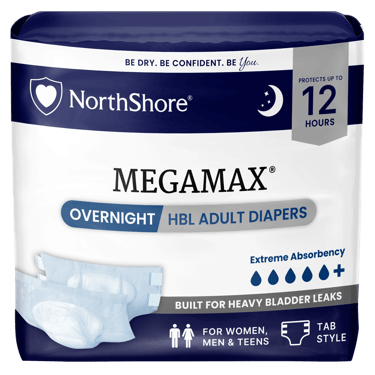
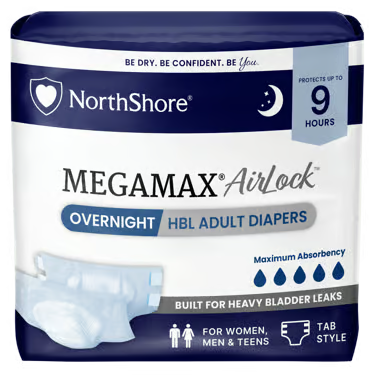
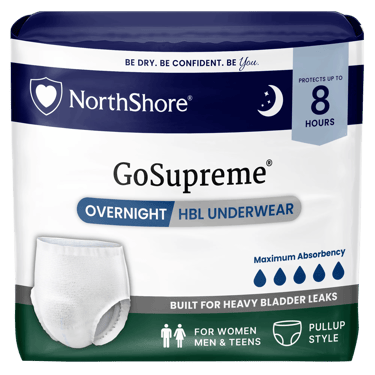
For people managing HBL, GoSupreme® pull-up style underwear offers a body-close, underwear-like fit with up to 8 hours* of protection and MVP™ (Multi-Void Protection) technology. For longer or more demanding days, MegaMax® 12 hour Overnight tab-style adult diapers and MegaMax® AirLock™ 9-hour adult diapers provide extended protection with a breathable option for active or warm-weather wear. Hero Club member Issah describes AirLock as "breathable, secure, and makes staying active feel effortless."
*An immediate change is required after a bowel movement.
Opening Up About Incontinence Makes a Difference
One of the hardest parts of incontinence at this age is the feeling that no one else is dealing with it. The silence is real — but so is the company.
Incontinence affects more people than diabetes and heart disease combined.⁴ The average person waits over six years before talking to a doctor about symptoms.⁷ That's a long time to manage something alone, especially when early conversations often lead to better outcomes. A doctor can help identify underlying causes, recommend pelvic floor physical therapy, explore medication options, or rule out conditions that deserve attention.
Opening up to one trusted person — a partner, a close friend, a healthcare provider — can also shift something emotionally. It creates space for practical support and the simple reassurance that this experience doesn't have to be carried alone.
NorthShore customer M.B. describes what that looked like: "None of us should have to feel like we're struggling alone. Sharing with my friend really changed everything. Not only was a load taken off my back, but she helped me find the right protection for dry nights."
Finding Support: Join NorthShore Hero Club™ and Talk to NorthShore Care Experts
Living with incontinence can feel isolating, but support and trusted guidance are available.
The NorthShore Hero Club™ is a community of customers and caregivers who have chosen to share their experiences openly—so the next person feels less alone. Stories from people in their 20s and 30s managing HBL, neurogenic bladder, postpartum leaks, and everything in between offer encouragement, practical insights, and reassurance that others have faced similar challenges.
The right protection supports those moments quietly — so attention stays on what you’re doing, not what might happen.
Read stories, and when ready, share your own at northshorecare.com/hero-club.
For personalized product guidance, NorthShore Care Experts are available by phone, text, or live chat 7 days a week. They provide judgment-free recommendations based on lifestyle, activity level, body type, and absorbency needs, answer product questions, and can help place a sample order.
For additional support, download the free Talking About Incontinence eBook. It includes practical tips, conversation guides, and real-life insights to help make discussions with family, friends, caregivers, and healthcare providers feel easier and more productive.
Frequently Asked Questions
Is it common to have incontinence in your 20s or 30s?
Bladder leaks can happen at any age. For some people, they arrive in their 20s or 30s — linked to pregnancy, pelvic floor dysfunction, overactive bladder, neurological conditions, high-impact exercise, or certain medical diagnoses. According to the NIDDK and the Mayo Clinic, these are all recognized causes of incontinence in younger adults.¹ ²
Why does incontinence happen during workouts?
High-impact movements like running, jumping, and heavy lifting increase abdominal pressure.³ If the pelvic floor muscles don't respond quickly enough to manage that pressure, leaks can happen — even in people who are otherwise fit and active.
Should incontinence in your 20s or 30s be discussed with a doctor?
Yes. Many causes are treatable or manageable when addressed early. A doctor can help identify underlying conditions, recommend pelvic floor physical therapy, or explore other options. The average person waits over six years to have that conversation⁷ — starting sooner tends to lead to better outcomes.
What type of protection works for active younger adults managing HBL?
GoSupreme® pull-up style underwear offers a familiar, body-close fit with strong HBL protection for active days. For longer or higher-output days, MegaMax® AirLock™ provides breathable extended protection without bulk. The right choice depends on the level of output and the demands of the day — NorthShore's Sample Program and Care Experts can help narrow it down.
How do I find others who understand what it's like to manage incontinence at this age?
The NorthShore Hero Club is a community of real customers who have shared their stories openly. Stories from younger adults managing HBL, neurogenic bladder, postpartum leaks, and more are there — and new stories are always welcome at northshorecare.com/hero-club.
Sources
Products Mentioned In This Article
More Helpful Tips & Resources


About NorthShore Care Supply
Founded in 2002, NorthShore Care Supply helps individuals and caregivers find the right protection for heavier leaks, overnight needs, and daily confidence. As the maker of NorthShore® Adult Diapers, we lead in high-performance protection for Heavy Bladder Leaks (HBL) and support #EndHealthStigma. Our expert Customer Care team provides private, compassionate guidance to help people choose products that fit their needs and lifestyle. Follow us on LinkedIn and Facebook @NorthShoreCareSupply, Twitter, Instagram and TikTok @NorthShoreCare.
Access your List
Connect on social:


