Top Tips for Talking to a Medical Professional About Incontinence

Key Takeaways:
-
Incontinence and Heavy Bladder Leakage are common health concerns, and talking openly with a medical professional is often the first step toward relief and better symptom management.
-
Preparing for your appointment with notes, questions, and a bladder or bowel diary can help you clearly communicate symptoms and advocate for your needs.
-
Asking targeted questions can uncover potential causes, treatment options, and lifestyle changes that may improve bladder or bowel control.
-
Support doesn’t stop at diagnosis. Ongoing guidance and the right incontinence products can help manage symptoms confidently day to day.
Why is it Important to Involve Your Doctor?
Incontinence, including Heavy Bladder Leakage, is more common than many people realize, yet it’s often one of the hardest health topics to talk about. Whether symptoms show up as occasional leaks or frequent, unpredictable accidents, changes in bladder or bowel control can affect daily routines, sleep, and emotional well-being. Still, many people delay seeking help due to embarrassment, uncertainty, or fear of what they’ll hear.
Talking to a medical professional is an important step toward understanding what’s happening and exploring options for treatment or management. Incontinence and Heavy Bladder Leakage can have many causes, and in many cases, symptoms are treatable or manageable with the right guidance. This guide offers practical tips to help you prepare for that conversation, ask the right questions, and feel more confident advocating for your health.
Tips To Get the Most Out of Your Doctor Appointment
Write down everything ahead of time.
Include any questions you have (no matter how big, small, or seemingly embarrassing!) as well as your top concerns and a clear description of your symptoms. A “silly” fear that turns out to be nothing is always better than an unanswered one lingering in your mind. Keep a running list in the days or weeks before your appointment and bring it with you.
Bring a list of all current medications and pertinent medical history (including a bladder/bowel diary if possible).
This is especially important with a new doctor. Include prescriptions, supplements, and over-the-counter meds you take regularly. If possible, keep a bladder or bowel diary for two days leading up to the visit to give helpful context about your symptoms.
Do your research.
Understanding as much as you can about incontinence before you speak with a medical professional will help you become an active decision-maker during the appointment. Aim to familiarize yourself with the most common terms, definitions, causes, and types of incontinence. If you’re not sure where to start, NorthShore’s free Incontinence 101 eBook offers a helpful breakdown of symptoms, statistics, and a wide variety of products that can support symptom management. And of course, if there’s anything you don’t understand during your appointment, don’t hesitate to ask. It’s your doctor’s job to explain things clearly, but it’s your job to make sure you walk away with the answers you need.
Talking to a Medical Professional: Essential Questions and Tips
If you’re unsure of where to begin, the list of questions and discussion items below can serve as a helpful starting point and checklist of things to remember for your upcoming appointment:
Good Questions to Ask
-
How much water or other fluids should I drink each day?
-
Are there certain foods or drinks that could make my incontinence worse?
-
What lifestyle changes (e.g., diet, fluid intake, physical activity) might help manage my symptoms?
-
Are there activities I should avoid? Are there any exercises—like Kegels—that may be beneficial?
-
Is bladder training a good option for me?
-
Are there medications that could help? What are their potential side effects?
-
Do you know what’s causing my incontinence? Are there tests you can run to help determine the cause?
-
Is my incontinence likely to be temporary or chronic?
-
Could I be a candidate for surgery or another procedure? What are the risks and benefits?
-
What are the pros and cons of the treatment plan you recommend?
-
Do you suggest any specific products or skincare routines to help protect sensitive areas?
Keeping a bladder & bowel diary can be very beneficial for you ahead of your appointment with a medical professional. By organizing your toileting activity in one place, it is easier to see patterns and address concerns.
Details to Include in a Bladder/Bowel Diary
-
A time log of all toileting activity (for at least a two-day period)
-
A detailed record of everything you eat and drink during that time
-
The number of nighttime bathroom trips
-
Any changes in urine flow strength throughout the day
-
Notes on bowel movements—are they easy, strained, or affected by constipation?
-
Any leakage incidents and the context in which they occurred
Need help getting started? Download NorthShore’s free Bladder & Bowel Diary for an easy-to-use tracker you can fill out and bring to your appointment.
Additional Information to Share with Your Doctor
-
When your symptoms began and how they’ve changed over time
-
How often leakage occurs and how much urine is typically lost
-
Any patterns or routines that seem to improve or worsen your symptoms
-
Specific activities (like coughing, sneezing, or exercising) that trigger leakage
-
Any homeopathic remedies, supplements, or treatments you’ve tried so far
How to Choose Premium Incontinence Protection Products
For anyone ready to ensure they are using the best protection, the NorthShore Sample Program makes it easy to try products before committing. Simply fill out a short form and choose up to six different products to sample for free (just pay for shipping). If you still seek additional guidance, NorthShore’s award-winning Customer Care Experts provide 100% judgment-free, personalized recommendations.
FAQ (Frequently Asked Questions)
-
Q: Why is it important to talk to my doctor about my incontinence symptoms?
-
A: Talking to a doctor can mean the difference between getting the help you need and suffering in silence. Incontinence, in particular, is often treatable—but many people miss that chance because they’re too embarrassed to speak up.
-
Q: How should I prepare for my doctor’s appointment to discuss incontinence?
-
A: Write down your questions and concerns for your doctor, bring a list of current medications, keep a bladder/bowel diary if possible, and do your research to understand as much about incontinence as you can ahead of the appointment. Being prepared for your appointment will help you be your own best advocate.
-
Q: What details should I include in a bladder and bowel diary?
-
A: A time log of all toileting activity, a detailed food log of everything you eat and drink, the number of nighttime bathroom trips, changes in urine flow strength, notes on bowel movements, and details about the circumstances around any leaks. It is best to keep a diary for at least two days.
-
Q: Does NorthShore offer support in choosing the right incontinence products?
-
A: Yes, you can utilize the Product Finder Tool to explore different NorthShore incontinence supplies. If you prefer more personal recommendations, NorthShore’s Customer Care Team is available 7 days a week for judgment-free help.
More Helpful Tips & Resources


About NorthShore Care Supply
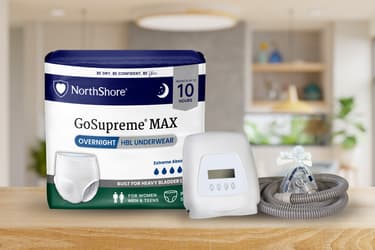
Founded in 2002, NorthShore Care Supply helps individuals and caregivers find the right protection for heavier leaks, overnight needs, and daily confidence. As the maker of NorthShore® Adult Diapers, we lead in high-performance protection for Heavy Bladder Leaks (HBL) and support #EndHealthStigma. Our expert Customer Care team provides private, compassionate guidance to help people choose products that fit their needs and lifestyle. Follow us on LinkedIn and Facebook @NorthShoreCareSupply, Twitter, Instagram and TikTok @NorthShoreCare.
Access your List
Connect on social:


