Choosing Incontinence Supplies After Prostate Surgery

Key Takeaways
-
Incontinence after radical prostatectomy is expected in the short term and generally improves to near baseline by 12 months, according to the American Urological Association.¹ Roughly 80% of men experience leaks immediately after surgery, dropping to between 3% and 12% at one year.²
-
Median time to continence recovery is about five months, though progress is rarely linear and varies widely between individuals.³
-
Protection needs change as recovery progresses. Most men move from high-absorbency products in the first weeks to male guards as output decreases, which means the right product at week two is usually not the right product at month four.
-
The AUA recommends pelvic floor muscle training for men seeking treatment for post-prostatectomy incontinence,¹ and research shows it measurably reduces leaks at one, three, and six months after surgery.⁴
Most men leave prostate surgery knowing incontinence is possible. Far fewer leave with a clear picture of what the next several months actually look like, or what to wear while the body recovers.
This matters because buying the wrong protection in week one tends to produce a frustrating experience that has nothing to do with the recovery itself. Products built for light bladder leakage (LBL) cannot handle the output most men have right after catheter removal, and products built for heavy output become unnecessary bulk once things improve.
This short guide covers what to expect at each stage and what to wear through it.
Why Prostate Surgery Causes Incontinence
Men have two mechanisms that control urine flow: the external urinary sphincter along with the pelvic floor muscles, and the internal urinary sphincter located within the prostate itself.⁵
When the prostate is removed, that second mechanism goes with it. All of the work shifts to the external sphincter and pelvic floor, which have never had to handle the job alone. In the immediate aftermath of surgery, those muscles usually are not strong enough yet.⁵
This is why post-prostatectomy leaks are typically stress incontinence: they happen with coughing, sneezing, laughing, lifting, or standing up from a chair. Some men also experience urgency. Both are common, and both generally improve as the pelvic floor adapts.
How Long Does Incontinence Last After Prostate Surgery?
The American Urological Association guideline states that incontinence is expected in the short term and generally improves to near baseline by 12 months, though it may persist and require treatment in some cases.¹
The numbers behind that:
-
Roughly 80% of men experience incontinence immediately after surgery²
-
At 12 months, that drops to between 3% and 12%²
-
Median time to continence recovery is about five months, with an 85% resolution rate³
-
Between 90% and 95% of men ultimately regain continence within the first year to 18 months⁵
One detail worth noting: progression is often not linear.⁵ A good week followed by a harder week is normal and does not indicate a setback. Fatigue, activity level, and fluid intake all affect day-to-day output during recovery.
How Exercise Can Help with Prostate Surgery Recovery
The AUA recommends pelvic floor muscle exercises or pelvic floor muscle training for men seeking treatment for incontinence after radical prostatectomy.¹
The evidence supports it. A meta-analysis of 15 randomized controlled trials involving more than 2,000 men found that pelvic floor muscle exercise after surgery significantly reduced incontinence at one month, three months, and six months compared to no training.⁴ Working with a pelvic floor physical therapist, particularly one using biofeedback, produces better results than exercising without guidance.⁶
For men whose incontinence persists beyond the expected recovery window, the AUA guideline notes that an artificial urinary sphincter should be discussed as an option for mild to severe stress incontinence after prostate treatment.¹ That conversation is worth having with a urologist rather than assuming nothing more can be done.
What to Wear at Each Stage of Recovery
Output changes substantially over the first several months, and protection should change with it. Most men move through two or three product types rather than staying with one.
Early recovery: the first weeks after catheter removal
This is when output is heaviest and least predictable. Many men are surprised by the volume, particularly in the first days after the catheter comes out.
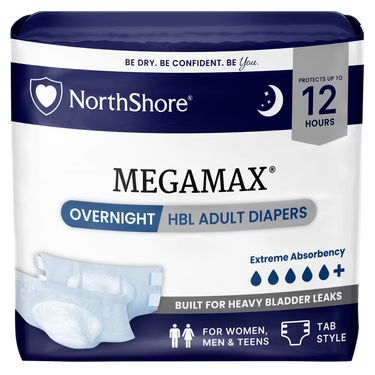
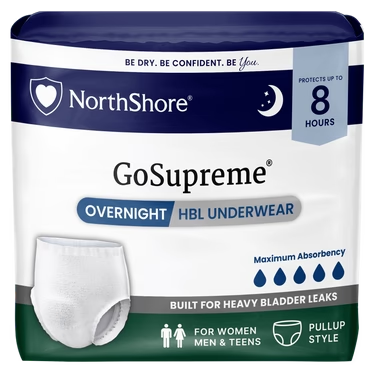
Products designed for Heavy Bladder Leaks (HBL) are the right starting point here. GoSupreme® pull-up style underwear provides up to 8 hours of protection in a familiar, underwear-like fit with MVP™ (Multi-Void Protection) technology and tear-away side seams for fast changes. For overnight or the heaviest early days, MegaMax® tab-style adult diapers provide up to 12 hours with refastenable tabs that allow adjustment without a full change.
Additionally, bed pads like MagicSorb® Air Underpads can provide an extra layer of protection for mattresses, couches, and chairs.
Mid recovery: as output decreases
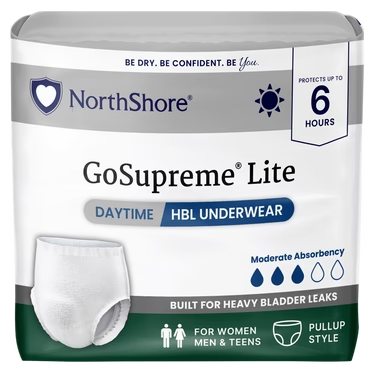
Once volume drops but leaks are still significant, GoSupreme® Lite offers up to 6 hours of protection in a lighter, less bulky design with the same breathable, cloth-like material. Many men find this is where they spend the longest stretch of recovery.
EternaDry® Booster Pads can add capacity inside any product on days that run longer or involve more activity, which is useful when returning to work or exercise.
Later recovery: light to moderate leaks
Once leaks are down to dribbles and stress-triggered leaks, a male guard worn inside regular underwear becomes the most practical and discreet option.
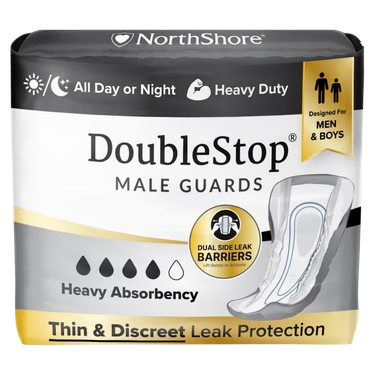
NorthShore DoubleStop® Male Guards are shaped for male anatomy with a cup-shaped fit that provides targeted coverage. A quick-wicking core locks in fluid and odor, true side leak guards add security during movement, and a full-length adhesive strip holds the guard in place through activity. The XL size provides wider front coverage, taller dual leak guards, and can hold up to one full bladder release for those who still are dealing with heavy leaks.
Worth knowing: the leading store-brand male guard recently removed its side elastics, leaving the pad flat and significantly less effective. DoubleStop XL maintains the structured, cup-shaped fit and true leak guards that make a real difference during activity.
Finding the Right Fit Without Guessing with NorthShore’s Product Finder
Most men go through several products during recovery, and buying full cases of each one is an expensive way to find out what works.
The NorthShore Sample Program exists for exactly this situation. Take a quick 4-question quiz to get matched with recommendations, then choose up to 6 free samples. Orders placed by 7pm Central in the contiguous U.S. ship same day in discreet, unmarked boxes. Shipping charges apply.
Because needs change through recovery, it is worth requesting samples again as output decreases rather than staying with a product that has become more than necessary.
NorthShore's Care Experts are real people, available seven days a week by call, text, or chat at 800-563-0161. They handle post-prostatectomy questions regularly and can help with sizing, absorbency, and knowing when it makes sense to step down to something lighter. They can also place a sample order directly, all judgment-free.
*An immediate change is required after a bowel movement.
Frequently Asked Questions
How long does incontinence last after prostate surgery?
The American Urological Association states that incontinence is expected in the short term and generally improves to near baseline by 12 months, though it may persist in some cases.¹ Roughly 80% of men experience leaks immediately after surgery, dropping to between 3% and 12% at one year.² Median time to recovery is about five months.³
What kind of incontinence happens after prostate surgery?
Most commonly stress incontinence, meaning leaks triggered by coughing, sneezing, laughing, lifting, or standing. This happens because the prostate contains one of the two mechanisms controlling urine flow, and removing it shifts the entire workload to the external sphincter and pelvic floor muscles.⁵ Some men also experience urgency.
What products work best right after prostate surgery?
Output is heaviest in the first weeks after catheter removal, so products built for HBL make the most sense. GoSupreme® pull-up style underwear suits daytime and MegaMax® works for overnight or the heaviest days. Light bladder leakage products are rarely sufficient at this stage.
When should someone switch to a male guard?
Once leaks are down to dribbles and stress-triggered leaks rather than larger voids. DoubleStop® Male Guards are shaped for male anatomy and worn inside regular underwear, making them the most discreet option for lighter output. DoubleStop XL offers wider front coverage for moderate leaks.
Do pelvic floor exercises actually help after prostate surgery?
Yes. The AUA recommends pelvic floor muscle training for men seeking treatment for post-prostatectomy incontinence,¹ and a meta-analysis of 15 randomized trials found it significantly reduced incontinence at one, three, and six months after surgery.⁴ Guided training with a pelvic floor physical therapist produces better results than exercising alone.⁶
Can incontinence products be worn with boxer shorts?
Not effectively. Guards and pads require snug, form-fitting underwear to stay in position. Pull-up style or tab-style products designed for incontinence work independently of underwear style and are a better option for men who prefer looser fits.
Sources
-
American Urological Association / GURS / SUFU. Incontinence After Prostate Treatment Guideline.
-
Pelvic Floor Rehabilitation After Prostatectomy: Baseline Severity as a Predictor of Improvement.
-
The effect of perioperative pelvic floor muscle exercise on urinary incontinence after radical prostatectomy: a meta-analysis.
-
Georgia Urology. Restoring Urinary Continence After a Prostatectomy.
-
Urinary incontinence rehabilitation after radical prostatectomy: a systematic review and network meta-analysis.
Products Mentioned In This Article


More Helpful Tips & Resources



About NorthShore Care Supply
Founded in 2002, NorthShore Care Supply helps individuals and caregivers find the right protection for heavier leaks, overnight needs, and daily confidence. As the maker of NorthShore® Adult Diapers, we lead in high-performance protection for Heavy Bladder Leaks (HBL) and support #EndHealthStigma. Our expert Customer Care team provides private, compassionate guidance to help people choose products that fit their needs and lifestyle. Follow us on LinkedIn and Facebook @NorthShoreCareSupply, Twitter, Instagram and TikTok @NorthShoreCare.
Access your List
Connect on social:


