Spina Bifida and Bladder Control: What Changes, What Helps, and How to Build a Routine That Works

Key Takeaways
-
Spina bifida can affect bladder and bowel control differently throughout life, so routines may need to change as mobility, health, schedules, and independence needs evolve.
-
Extended sitting can change product fit and performance, making secure coverage, a stable absorbent core, and enough capacity especially important for wheelchair users and others who remain seated for long periods.
-
Matching protection to the situation can reduce disruptions, with options such as GoSupreme pull-up underwear for active daytime routines and MegaMax adult diapers for overnight or extended wear.
-
A flexible continence-care setup can support drier skin, more restful sleep, greater confidence, and more freedom during work, travel, relationships, and everyday activities.
Living with spina bifida often means becoming an expert in your own body earlier than most people.
Spina bifida affects how the spine and spinal cord develop before birth. For some people, it also affects the nerves responsible for bladder and bowel function. This may mean managing urgency, difficulty emptying the bladder, catheter routines, bowel programs, leaks without warning, or a combination of symptoms.
Bladder management is rarely just about what happens in the bathroom. It can influence sleep, transportation, work schedules, relationships, caregiving, travel, skin health, and the amount of physical and mental energy required to get through the day.
The goal is not to force every person into one supposedly perfect routine. It is to build a system that works with your body, your medical care, your mobility, and your actual life.
How Spina Bifida Can Affect Bladder Control
The nerves involved in bladder function help the bladder store urine, recognize when it is full, and empty at the right time. When communication between the bladder, spinal cord, and brain is disrupted, a person may develop neurogenic bladder.
Symptoms vary widely. Some people experience frequent urgency or leaks. Others have little warning before urination, difficulty emptying the bladder completely, urinary retention, overflow leakage, nighttime incontinence, or bowel symptoms alongside bladder symptoms.
Spina bifida can also increase the risk of urinary tract infections and kidney complications when the bladder does not empty or function properly. That is why ongoing medical monitoring remains important even when a daily routine feels stable.
Two people with the same diagnosis may have completely different continence needs. One person may prioritize independent changes during work or school. Another may need dependable overnight capacity. Someone who remains seated for much of the day may care most about fit, pressure, and protection that stays structured instead of sagging.
The diagnosis is only one part of the picture. The better question is: What does bladder management need to accomplish in this person's real life?
Protection Is One Part of Bladder Management
Adult diapers, pull-up underwear, booster pads, and underpads can help manage leaks, but they do not treat the underlying bladder condition.
Depending on the individual, a clinician-directed bladder routine may involve intermittent catheterization, medication, scheduled bathroom visits, bladder procedures, surgery, or other treatments. A bowel-management plan may also be part of reducing accidents and supporting daily comfort.
Absorbent protection works alongside that medical routine. It can provide backup for unpredictable leaks, protection between catheterizations, support during sleep, or added confidence during work and travel.
This distinction matters. A sudden change in leakage does not always mean someone simply needs a more absorbent product. New or worsening bladder symptoms should be discussed with a healthcare professional, especially when a previously reliable routine stops working.
Childhood Management Often Looks Different From Adult Management
Many adults with spina bifida grew up using routines selected largely by parents, caregivers, schools, or medical teams. Those systems may have worked well during childhood but no longer fit adult priorities.
Adulthood introduces a different set of realities:
-
Employment and university schedules
-
Commuting and public transportation
-
Independent or assisted transfers
-
Dating, relationships, and intimacy
-
Parenting and family responsibilities
-
Adaptive sports and recreation
-
Long medical appointments
-
Overnight travel
-
Increased privacy and personal choice
Someone attending long lectures or working full office days may prioritize fewer disruptive changes and dependable odor control. A person who transfers independently from a wheelchair may prefer refastenable tabs that can be adjusted without fully removing clothing.
These are not minor preferences. They affect dignity, energy, privacy, and the ability to participate in everyday life.
Bladder Routines Can Change Again During Adulthood
Bladder management may feel stable for years and then suddenly become less predictable.
Changes in health, medications, mobility, weight, muscle tone, dexterity, pregnancy, surgeries, or other medical needs can all affect an established routine. Pregnancy, for example, may change both bladder and mobility needs for women with spina bifida.
Changes may also be practical rather than medical. A new job might make frequent bathroom access difficult. A different wheelchair or seating position may change how a product fits. Reduced hand strength may make one product style harder to manage independently.
It can be frustrating when a system that once worked no longer does. But changing the routine is not failure. Lifelong conditions evolve, and the tools used to manage them often need to evolve too.
Independence Can Look Different at Different Times
Independence is often described too narrowly.
Some people with spina bifida manage every part of bladder and bowel care on their own. Others receive help from caregivers, partners, family members, or personal care assistants. Some manage independently at home but need assistance while traveling or during periods of illness.
Needing help does not eliminate autonomy.
A person can still decide which products feel comfortable, when changes happen, who provides assistance, how privacy is protected, and what matters most in the routine. The Spina Bifida Association recognizes that bladder programs, bowel programs, skin checks, and other self-management tasks may require individualized support as people move through childhood and adulthood.
Products that reduce emergency changes or make longer stretches between changes possible can support independence in a practical way. They may reduce how often assistance is needed, make outings easier to plan, or allow a person to sleep without relying on repeated overnight changes.
Why Sitting for Extended Periods Changes Product Needs
Most incontinence advice is written as though everyone spends the day standing or walking.
That leaves out wheelchair users and anyone who spends long periods seated in vehicles, classrooms, offices, recliners, or medical settings.
Hours of seated wear can compress an absorbent core and change how a product rests around the legs, hips, and waistband. A fit that looks secure while standing may create a gap, fold, or pressure point once the person is seated.
For Heavy Bladder Leaks (HBL), consider the following:
Check the fit while seated
Do not judge the fit only while standing or lying down. After fastening the product, check the leg openings, waistband, and rear coverage in the person's usual seated position. The product should feel secure without digging into the skin or restricting movement. Recheck the fit after transfers because clothing and absorbent products can shift.
Look for structure, not just laboratory capacity
A large absorbency number does not automatically mean a product will perform well during extended sitting. The core also needs to distribute liquid effectively and remain stable as it fills. MegaMax tab-style adult diapers have an extra-wide, extra-long absorbent core, a durable exterior, and large refastenable tabs designed to remain secure at higher capacity. The tabs can also be adjusted as positioning, swelling, or clothing layers change.
Watch for pressure and skin changes
Some people with spina bifida have reduced sensation and may not immediately feel rubbing, dampness, bunching, or pressure against the skin. Regular visual skin checks are important, particularly around areas affected by prolonged sitting, seams, fasteners, and leg openings. No adult diaper should be used as a substitute for regular repositioning, pressure-relief routines, or clinician-recommended skin care.
Why Overnight Protection Matters So Much
An overnight leak is not always a quick inconvenience.
For someone with reduced mobility, changing an adult diaper, clothing, bedding, or an underpad may require transfers, caregiver assistance, or a complete interruption to sleep. Repeating that routine several times a night can be physically exhausting.
Previous leaks may also make it difficult to trust a product. Some people sleep lightly, wake repeatedly to check for wetness, or place several towels across the bed because they expect protection to fail.
A higher-capacity overnight setup may reduce those disruptions.
MegaMax adult diapers provide up to 12 hours of protection and include a durable backing, high-capacity core, leak guards, and refastenable tabs. Actual wear time depends on output, fit, body position, product size, and individual needs, so "up to 12 hours" should not be treated as a required change schedule.
MagicSorb® Air Underpads can add backup protection for a mattress, wheelchair cushion, or recliner. An underpad is not a replacement for a properly fitted product, but it can make unexpected leaks easier to manage.
When bowel incontinence occurs, the product should be changed immediately rather than waiting for the end of a planned wear period.
Skin Protection Becomes More Important Over Time
Absorbency is not only about avoiding visible leaks.
Long periods of dampness, friction, pressure, and heat can affect the skin. This may be especially concerning for people who have reduced sensation, remain seated for extended periods, or do not immediately notice a leak.
A practical skin-protection routine may include:
-
Using a product that fits without pinching or creating gaps
-
Changing promptly when soiled
-
Cleaning the skin gently during changes
-
Allowing the skin to dry before applying a fresh product
-
Checking areas with reduced sensation regularly
-
Following any barrier-cream or skin-care plan recommended by a healthcare professional
-
Watching for persistent redness, open skin, blisters, swelling, or other changes
The Spina Bifida Association emphasizes regular skin checks and prevention because a person with reduced sensation may not feel early damage. A more absorbent product can help keep moisture away from the skin, but it does not make skin checks unnecessary.
Building a Setup That Fits Real Life
Long-term management is usually easier when protection matches the situation instead of expecting one product to handle every part of the day. Many people rotate between different products depending on activity, mobility, assistance, and expected wear time.
For active daytime routines
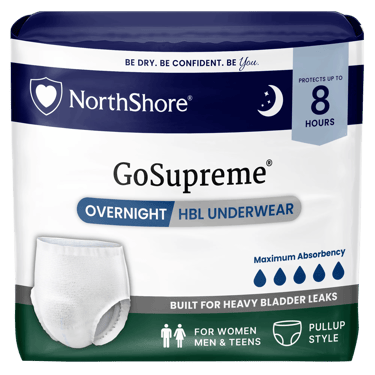
GoSupreme pull-up underwear may work well for people who can pull underwear up and down independently or with minimal help, prefer an underwear-like fit under clothing, need protection during work, appointments, errands, or social activities, or want a balance between absorbency and mobility. GoSupreme is designed for Heavy Bladder Leaks and provides up to eight hours of protection. Actual wear time will vary based on fit, output, activity, and individual needs.
For extended sitting, overnight wear, or assisted changes
MegaMax tab-style adult diapers may be a better fit for people who need more overnight or extended-wear capacity, spend long periods seated, prefer adjustable refastenable tabs, receive help from a caregiver, find removing pants and shoes for every change difficult, or want more structured front and rear coverage. MegaMax provides up to 12 hours of protection, with refastenable tabs that can help simplify fit adjustments and assisted changes.
For temporary increases in absorbency needs
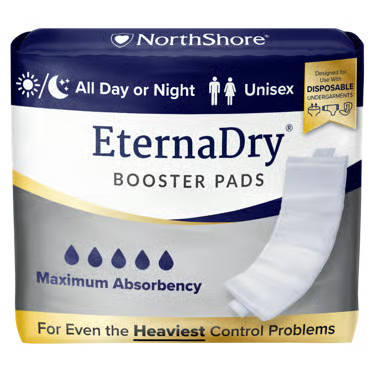
EternaDry® Booster Pads can add absorbency to a compatible adult diaper or pull-up underwear. A booster may be helpful during travel, illness, menstruation, long appointments, or overnight use. Unlike a standard pad with a waterproof backing, a flow-through booster is designed to fill and then allow liquid to pass into the absorbent product underneath. More absorbency is not always better if it damages the fit. A booster that is too large can push apart the leg openings or create pressure. Test the full setup while sitting, lying down, and moving through normal transfers.
For backup surface protection
MagicSorb® Air Underpads can help protect mattresses, wheelchair cushions, recliners, vehicle seats, and changing surfaces. Use an underpad as backup rather than relying on it to compensate for an adult diaper or pull-up underwear that does not fit correctly.
Build Around the Hardest Part of the Day
Not sure where to start? Identify the part of the routine causing the most disruption. Is it leaking during long periods of sitting? Waking for repeated overnight changes? Difficulty completing changes independently? Skin irritation? Sagging or gaps around the legs? Having to remove too much clothing for changes? Uncertainty about which product style works best?
Start there. A better routine does not have to solve every problem at once. One successful change, such as improving overnight fit or reducing one emergency change during the workday, can make the entire system feel more manageable.
Managing Incontinence Is Only One Part of Life
People with spina bifida build careers, relationships, families, routines, hobbies, communities, and identities that have nothing to do with bladder control.
But continence care happens every day. When the routine becomes more dependable, the benefits can reach far beyond the product itself. More comfortable sleep can mean more energy. Fewer leaks during long outings can reduce the urge to stay home. A product that works better while seated can make work, school, travel, or adaptive recreation easier to plan.
The goal is not perfection. Bodies change. Schedules change. Some days are messier than others. The goal is to build a flexible routine that gives incontinence less power over the rest of life.
NorthShore's Sample Program allows customers to select up to six free samples and pay only for shipping. A four-question quiz can help narrow down the options before ordering. Orders placed by 7pm Central ship to the contiguous U.S. same day in discreet, unmarked boxes.
NorthShore Care Experts are available by call, text, or chat seven days a week. They can help compare product styles, sizes, absorbency levels, seated fit needs, overnight setups, and sample options without judgment.
Frequently Asked Questions
Does spina bifida always cause incontinence?
No. Bladder and bowel symptoms vary widely depending on the type of spina bifida, nerve involvement, mobility, medical history, and other individual factors. Some people experience occasional urgency or leaks, while others manage neurogenic bladder or bowel symptoms throughout life.
What is neurogenic bladder?
Neurogenic bladder is a term for bladder-control problems caused by disrupted communication between the bladder, spinal cord, brain, or related nerves. A person may have trouble storing urine, recognizing a full bladder, emptying completely, or controlling when urination happens.
Why might bladder management change during adulthood?
Changes in health, medications, mobility, pregnancy, surgery, strength, dexterity, body shape, or daily schedules can affect how well an established routine works. A healthcare professional should evaluate new or unexplained bladder changes rather than assuming they are simply a normal part of aging.
What products work well for Heavy Bladder Leaks with spina bifida?
The right product depends on mobility, changing ability, positioning, output, and expected wear time. GoSupreme pull-up underwear may suit active daytime routines and independent bathroom use. MegaMax tab-style adult diapers may provide more adjustability and capacity for overnight wear, extended sitting, travel, or caregiver-assisted changes.
Why does a product sometimes leak while sitting even when the absorbency seems high enough?
Sitting can change the product's shape and compress the absorbent core. It may also create gaps at the legs or waistband that were not visible while standing. Check the size and fit in the person's normal seated position, not only while standing or lying down.
Can a booster pad be used to avoid changes all day?
A booster can increase capacity, but it should not replace an appropriate change routine. Product fit, skin condition, output, comfort, and bowel movements still determine when a change is needed. An immediate change is required after a bowel movement.
This article is for general educational purposes and does not replace individualized medical advice. Talk with a qualified healthcare professional about bladder or bowel symptoms, new changes, catheter routines, urinary tract concerns, skin problems, or treatment decisions.
Sources
-
Centers for Disease Control and Prevention. Living with Spina Bifida.
-
Mayo Clinic. Spina Bifida: Symptoms and Causes.
-
Mayo Clinic. Neurogenic Bladder and Bowel Management.
-
Spina Bifida Association. Guidelines for the Care of People with Spina Bifida: Urology.
-
Spina Bifida Association. Integument (Skin) Guideline.
-
Spina Bifida Association. Bowel Function and Care Guideline.
Products Mentioned In This Article


More Helpful Tips & Resources



About NorthShore Care Supply
Founded in 2002, NorthShore Care Supply helps individuals and caregivers find the right protection for heavier leaks, overnight needs, and daily confidence. As the maker of NorthShore® Adult Diapers, we lead in high-performance protection for Heavy Bladder Leaks (HBL) and support #EndHealthStigma. Our expert Customer Care team provides private, compassionate guidance to help people choose products that fit their needs and lifestyle. Follow us on LinkedIn and Facebook @NorthShoreCareSupply, Twitter, Instagram and TikTok @NorthShoreCare.
Access your List
Connect on social:


