Overactive Bladder and Anxiety: How Are Stress and Bladder Control Connected?

Key Takeaways
-
Overactive bladder (OAB) affects an estimated 16.5% of adults, translating to as many as 33 million people in the United States, and stress can make its symptoms feel more intense even though anxiety is more often a result of OAB than a proven cause.¹
-
Lifestyle habits such as limiting caffeine and alcohol, following a consistent bathroom schedule, and pelvic floor exercises are established, non-pharmacological ways to support bladder control.¹ ²
-
Mindfulness, deep breathing, and regular movement can help calm the nervous system, which also plays a role in how the bladder signals urgency.¹
-
Pairing these habits with dependable protection, like MegaMax® adult diapers and GoSupreme® pull-up style underwear, supports confidence throughout the day.
Overactive bladder (OAB) affects an estimated 16.5% of adults, translating to as many as 33 million people in the United States alone.¹ For many, the frustrating part is not just the urgency itself, but the worry that builds around it: wondering whether the next meeting, flight, or errand will come with an unexpected dash to the restroom.
The relationship between anxiety and OAB tends to run in both directions. Mayo Clinic notes that when OAB symptoms disrupt daily life, anxiety and emotional distress are common experiences that can follow.² At the same time, bladder control depends on a steady back-and-forth between the brain and the bladder's detrusor muscle, the same nervous system pathways involved in the body's stress response, which is part of why calming techniques are often recommended alongside other OAB strategies.¹
None of this has to feel discouraging. Diet, movement, sleep, and stress-management habits all give people real, evidence-informed ways to influence how OAB feels day to day, and pairing those habits with dependable protection makes it easier to stay focused on the day ahead rather than the nearest restroom.
What Is the Link Between Anxiety and Overactive Bladder?
Anxiety and OAB are connected, but not always in the direction people assume. Mayo Clinic lists anxiety, emotional distress, and sleep disturbances as complications that can follow when OAB symptoms disrupt daily life, rather than as established causes of the condition itself.² In other words, living with frequent urgency can understandably wear on a person's stress levels.
At the same time, researchers have long studied how the nervous system governs bladder behavior. A review of OAB research explains that bladder control depends on a complex interaction between the central and peripheral nervous systems, and that any imbalance in the signals that excite or calm the detrusor muscle can contribute to the urgency seen in OAB.¹ Since the body's stress response runs through some of these same nervous system pathways, it makes sense that many people notice their symptoms feel more pronounced during stressful stretches of life, even without a direct causal link being firmly established.
Naming this two-way relationship can be genuinely reassuring. It means stress is not something to blame for OAB, but it also means calming the body and mind is a legitimate, evidence-informed part of managing it well.
What Are the Symptoms and Causes of Overactive Bladder?
OAB is defined by a cluster of symptoms rather than a single test. Mayo Clinic identifies the core symptoms as a sudden urge to urinate that is hard to control, urgency incontinence, urinating eight or more times in 24 hours, and nocturia, meaning waking more than twice a night to urinate.² While OAB becomes more common with age, Mayo Clinic is clear that it is not something everyone should simply expect to live with as they get older.²
A number of conditions can contribute to OAB, including bladder tumors or stones, neurological conditions such as stroke or multiple sclerosis, diabetes, an enlarged prostate, constipation, hormonal changes during menopause, and urinary tract infections.² Caffeine, alcohol, certain medications, and difficulty reaching a bathroom quickly can also play a role.² Sometimes no clear cause is ever identified, which can feel frustrating but is also a reminder that OAB is a well-documented, common condition rather than a personal failing.
Nocturia deserves particular attention. Research shows it is often the most bothersome OAB symptom, and it has been linked to poorer sleep quality and lower overall quality of life, particularly among older adults.¹ Addressing nighttime symptoms directly, rather than accepting them as unavoidable, can meaningfully improve day-to-day well-being.
What Lifestyle Habits Support Bladder Control?
Diet and daily habits play a meaningful role in bladder comfort for many people. Mayo Clinic points to a few specific, well-supported strategies: limiting caffeine and alcohol, strengthening the pelvic floor with Kegel exercises, getting regular physical activity, and managing chronic conditions like diabetes that can add to OAB symptoms.² A broader review of OAB research adds bladder training, sometimes called habit training, and pelvic floor muscle training with or without biofeedback, as effective non-pharmacological approaches.¹
Being mindful of specific triggers can help too. Caffeine, alcohol, and acidic foods are among the most commonly cited dietary triggers for OAB symptoms.¹ Other foods and drinks, such as carbonated beverages or spicy dishes, may also affect symptoms for some people, since bladder sensitivity varies quite a bit from person to person, and noticing personal patterns is often the most useful strategy. Staying steadily hydrated, rather than drinking too little or too much at once, and easing fluid intake later in the evening, can also support more predictable patterns, including fewer nighttime disruptions.
Bladder training is worth calling out on its own. It typically starts with urinating on a fixed schedule, sometimes as often as every 30 minutes at first, and gradually extends the time between bathroom visits as the bladder adjusts.¹ It takes patience, but it is one of the more well-studied ways to build back a sense of predictability.
How Can Stress-Management Techniques Support Bladder Control?
Since bladder control and the body's stress response share overlapping nervous system pathways, calming techniques are a reasonable, low-risk addition to an OAB management plan.
Mindfulness and Relaxation
Practices like meditation, progressive muscle relaxation, and guided imagery help calm the nervous system's stress response, which may in turn ease how strongly the bladder reacts to urgency signals. Even a few minutes of slow, deep breathing during a moment of urgency may help create enough of a pause to reach a restroom calmly rather than rushing.
Physical Activity
Regular movement, such as walking, swimming, or yoga, is one of the lifestyle changes shown to support bladder function.¹ Activity does not need to be intense to be worthwhile. Short, consistent sessions throughout the week can help regulate stress hormones and build confidence in daily routines.
Sleep Hygiene
Because nocturia is often the most disruptive OAB symptom,¹ good sleep habits do double duty: they support lower stress hormone levels and can make nighttime urgency feel less disruptive. A consistent wind-down routine, such as dimming lights, limiting screens, and reducing caffeine later in the day, supports more restorative sleep overall.
Which NorthShore Products Offer Reliable Protection for OAB and Stress?
Even with strong stress-management habits in place, unexpected urges and leaks can still happen, and that is where dependable protection plays an important role, not as a fallback, but as a way to stay focused on the day rather than the bladder.
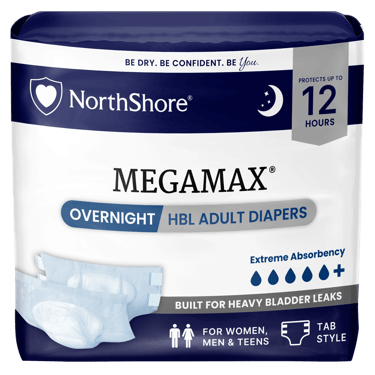
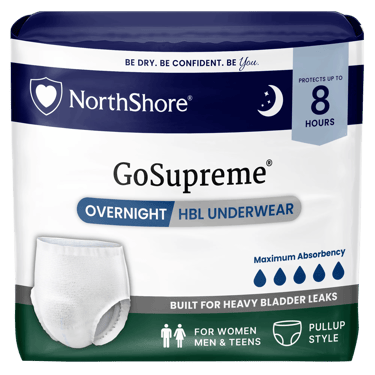
MegaMax® tab-style adult diapers and GoSupreme® pull-up style underwear are designed for real-life demands, offering security, discretion, and comfort across busy workdays, travel, social events, and overnight use. For people managing more frequent or heavier leaks, sometimes referred to as Heavy Bladder Leaks (HBL), MVP™ (Multi-Void Protection) technology in MegaMax helps lock in multiple voids while keeping the surface feeling dry, combined with high-capacity materials that offer up to 3x more absorbency than leading store brands.
For active days, GoSupreme provides long-lasting protection for up to two full bladder releases. It boasts a close-to-body fit that moves naturally, making it easier to stay secure through commuting, exercise, or time with others.
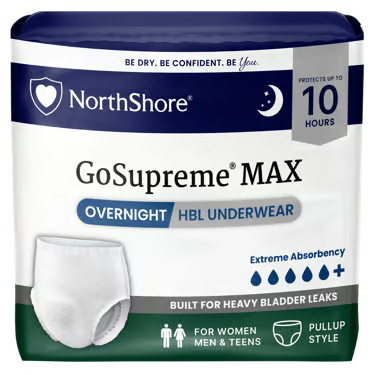
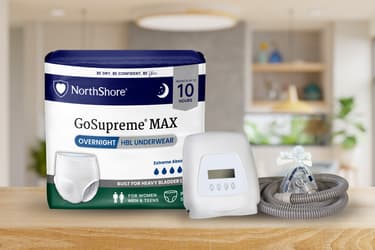
Because nocturia is so often the OAB symptom that disrupts life the most,¹ overnight protection deserves its own plan. GoSupreme Max® is built specifically for side sleepers and offers up to 10 hours of secure, overnight coverage, helping eliminate the middle-of-the-night waking cycle that so often accompanies OAB. With protection that holds reliably through the night, there is no need to wake for a change. Just an undisturbed night and a dry, comfortable start to the morning. For those who want extended coverage across a longer stretch, MegaMax offers up to 12 hours of protection with a secure fit that stays in place through the night, even for side sleepers.
Since better sleep supports lower stress hormone levels and steadier bladder control the next day,¹ reliable overnight protection is not just about staying dry. It is part of the broader cycle that makes managing OAB, and the stress that comes with it, feel more manageable.
With the right protection in place, it becomes easier to plan less around bathroom access and more around the things that matter.
How Can Daily Habits and Protection Work Together?
Managing OAB often works best when practical habits and reliable protection come together as part of an everyday routine. Having a plan in place, along with trusted products, can help reduce uncertainty and support greater confidence at work and in social settings.
Discreet Carrying and Quick Changes
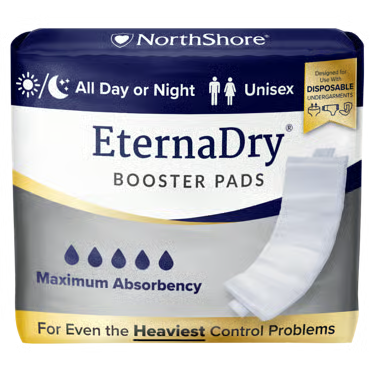
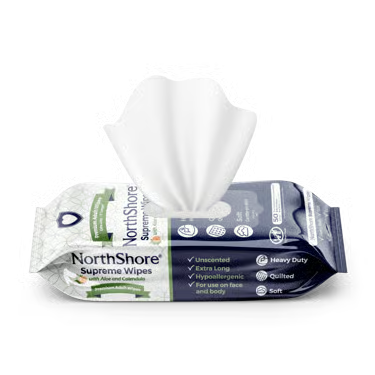
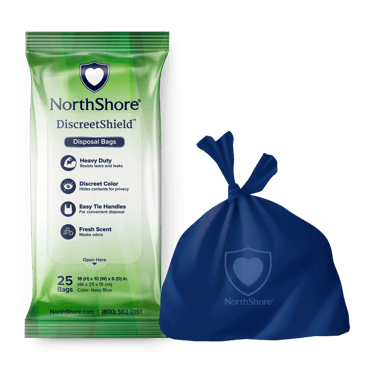
Keeping a small kit with extra adult diapers, EternaDry® booster pads, Supreme Cleaning Wipes, and DiscreetShield™ disposal bags can make changes easier and more discreet wherever the day leads.
Planning for High-Stress Moments
Identifying situations that tend to increase anxiety, such as presentations, meetings, or travel, and planning ahead can ease pressure before it builds. Wearing higher-absorbency protection for long events, scheduling bathroom breaks when possible, and using calming techniques together can make demanding days feel far more manageable.
How Can Emotional Support Help With Anxiety and OAB?
Addressing the emotional side of OAB can be just as important as managing physical symptoms. Mayo Clinic notes that when OAB disrupts daily life, anxiety, emotional distress, and sleep disturbances are common experiences.² Finding ways to feel supported, whether through personal strategies or conversations with others, can help lighten that load and make day-to-day management feel more manageable.
Therapy and Counseling
Some people explore cognitive-behavioral therapy (CBT) or general counseling as a way to better understand how stress and anxiety affect the body. These approaches focus on identifying thought patterns, building coping strategies, and reducing triggers that can contribute to urgency. This type of support is not necessary for everyone, but it can be a helpful avenue for those who feel anxiety is playing a significant role in their symptoms.
Support Networks
Talking about incontinence is not always easy, but sharing experiences, even with one trusted person, can help reduce feelings of isolation. Friends, family members, or peer support groups can offer reassurance, practical tips, and the reminder that this is a common, well-documented condition rather than something to navigate alone.
Building a Roadmap for Managing OAB and Stress
Managing OAB often comes down to a combination of small, practical strategies working together over time. Lifestyle adjustments, stress-management techniques, and reliable protection each play a role in creating a steadier, more predictable routine.
Mindfulness, regular movement, consistent sleep, and planning ahead can help ease the intensity of urgency, while dependable, discreet protection adds a layer of security for moments that are harder to predict. Together, these approaches make it possible to stay focused on the day rather than the bladder.
For personalized guidance, NorthShore's Care Experts are available by call, text, or chat, seven days a week, judgment-free, and can help place a sample order directly. The NorthShore Sample Program also offers up to 6 free samples, matched through a short, 4-question quiz, with orders placed by 7 pm Central shipping the same day to addresses in the contiguous United States in discreet, unmarked boxes (standard shipping charges apply).
*An immediate change is required after a bowel movement.
Frequently Asked Questions
Can anxiety make overactive bladder symptoms feel worse?
Anxiety and OAB are closely connected, though research suggests the relationship often runs from OAB toward anxiety rather than the other way around. Mayo Clinic lists anxiety and emotional distress as common experiences when OAB symptoms disrupt daily life.² Since bladder control and the body's stress response share some of the same nervous system pathways, calming techniques can still be a useful part of managing symptoms day to day.
What lifestyle changes help reduce OAB symptoms?
Limiting caffeine and alcohol, strengthening the pelvic floor with Kegel exercises, staying physically active, and following a consistent bathroom schedule are all supported strategies.¹ ² Bladder training, which gradually extends the time between bathroom visits, is another well-studied, non-pharmacological approach.¹
Are there products that help during stressful or unpredictable situations?
Yes. Higher-absorbency adult diapers like MegaMax and pull-up style underwear like GoSupreme provide discreet protection for school, work, social events, or travel, so unpredictable moments feel less stressful to manage.
Can stress-management techniques actually support bladder function?
Practices like mindfulness, deep breathing, and counseling help calm the nervous system's stress response, and combined with lifestyle adjustments, many people find this supports steadier bladder control over time. These techniques work best as part of a broader plan rather than a stand-alone fix.
How can someone prepare for unexpected urges in public?
Carrying a small kit with extra adult diapers, booster pads, wipes, and disposal bags can make unexpected changes easier and more discreet. Planning bathroom access when possible, and combining protective products with calming techniques, can help maintain confidence throughout the day.
Sources
-
National Center for Biotechnology Information, PubMed Central. Peer-reviewed review article on overactive bladder syndrome, covering prevalence, pathophysiology, and management (PMC5903463).
-
Mayo Clinic. "Overactive bladder."
Products Mentioned In This Article
More Helpful Tips & Resources


About NorthShore Care Supply
Founded in 2002, NorthShore Care Supply helps individuals and caregivers find the right protection for heavier leaks, overnight needs, and daily confidence. As the maker of NorthShore® Adult Diapers, we lead in high-performance protection for Heavy Bladder Leaks (HBL) and support #EndHealthStigma. Our expert Customer Care team provides private, compassionate guidance to help people choose products that fit their needs and lifestyle. Follow us on LinkedIn and Facebook @NorthShoreCareSupply, Twitter, Instagram and TikTok @NorthShoreCare.
Access your List
Connect on social:


