-

Incontinence 101: Types, Triggers, and Finding the Right Product
What causes incontinence, the types and triggers behind bladder and bowel leaks, how to choose protection for the leak level, how to size adult diapers, and where to find support.
Types • Causes • Leak Levels • When to Seek Help • Products • Sizing • Support
What is Incontinence?
Incontinence, the involuntary loss of bladder or bowel control, is one of the most common health experiences that people rarely talk about.
It affects people of every age, from new parents to college students to retirees, and it affects caregivers, who are often the first to notice a parent's or partner's symptoms and the first to start researching on their behalf.
It affects people of every age, from new parents to college students to retirees, and it affects caregivers, who are often the first to notice a parent's or partner's symptoms and the first to start researching on their behalf.
This guide covers what incontinence is, why it happens, and how to tell light, occasional leaks apart from heavier, more frequent ones. It also covers when a symptom is worth mentioning to a doctor, and how to choose the right products once the picture is clearer. None of it requires having all the answers up front. Understanding the condition is simply the first step toward managing it well.
Incontinence at a Glance
Incontinence is far more common than people assume. According to the National Association for Continence (NAFC), incontinence affects more adults than diabetes and heart disease combined, yet it remains one of the least discussed health conditions in the country.¹ Many people manage symptoms privately for years, often out of embarrassment, before mentioning them to anyone, let alone a doctor.
Incontinence does not have to define someone's life. For many people, it's a manageable, even temporary, symptom tied to a specific and treatable cause, such as a pregnancy, a medication, an infection, or a stage of recovery. For others, it becomes a longer-term reality that calls for a combination of medical care, lifestyle adjustments, and reliable products. Either way, the path forward starts with understanding what's actually happening in the body.
Incontinence = Very Common
Affects more adults than diabetes and heart disease combined.1
Help = Often Delayed
People wait an average of 6-8 years before mentioning symptoms to a doctor.1
Protection = Often Failing
73% of users aren't confident their current product won't leak.5
Stress Incontinence
Leaks triggered by physical pressure on the bladder, such as coughing, sneezing, laughing, exercising, or lifting. It's most often linked to weakened pelvic floor muscles, which can result from pregnancy, childbirth, surgery, or aging.
Urge Incontinence
A sudden, intense need to urinate that's difficult to control, sometimes followed by leakage before reaching a bathroom. Often associated with an overactive bladder, this type can be triggered by running water, temperature changes, or even the act of arriving home.
Overflow Incontinence
Frequent dribbling caused by a bladder that doesn't empty completely. This can result from a blockage, weak bladder muscles, or nerve damage that interferes with normal signaling.
Functional Incontinence
Leaks that occur not because of a problem with the bladder or bowel itself, but because a physical or cognitive barrier, such as limited mobility, arthritis, or memory loss, prevents reaching a bathroom in time.
Mixed Incontinence
A combination of two or more types, most often stress and urge incontinence together. It's common and typically calls for a more comprehensive management approach.
Bowel (Fecal) Incontinence
The involuntary loss of stool, gas, or mucus. It's categorized separately from bladder incontinence and often requires products with different features, including extra rear coverage and stronger odor control.³
For a closer look at causes, symptoms, and product recommendations specific to bowel leaks, see NorthShore's guide to bowel incontinence.
Light Bladder Leaks (LBL)
Light Bladder Leaks (LBL) are sporadic and typically involve small amounts of urine, drops or light dribbles, often triggered by a specific activity like coughing or exercise. LBL is generally predictable and can usually be managed with a liner or light pad.
Heavy Bladder Leaks (HBL)
Heavy Bladder Leaks (HBL) involve larger volumes, more frequent episodes, and often little to no warning, including full bladder releases during the day or overnight. HBL is frequently linked to conditions like overactive bladder or neurogenic bladder, and to diuretics that increase urine output. Bowel incontinence is generally categorized alongside HBL as well, since it typically calls for a similar level of protection.
| Light Bladder Leaks (LBL) | Heavy Bladder Leaks (HBL) | |
| Volume | Small, occasional drops or dribbles | Larger volumes, often multiple full voids |
| Warning | Usually predictable, tied to a trigger | Often little to no warning |
| Typical products | Liners, pads, or guards | Pull-up style underwear or tab-style adult diapers |
| Frequency | Occasional | Can occur throughout the day and night |
Why Do Store-Brand Products Leak for People With HBL?
Most store-brand products, even those labeled maximum absorbency or overnight, are designed around light-leak patterns. For someone managing HBL, that mismatch is often the real reason leaks continue even after switching to a supposedly stronger product. The product was never built for the volume it's being asked to handle. NorthShore is built specifically around this gap, offering incontinence products engineered for HBL rather than adapted from lighter-leak designs.
Incontinence is common, but that doesn't mean it should be ignored. Many underlying causes are treatable, and a healthcare provider can help rule out anything more serious.
It's worth talking to a healthcare provider if:
 Symptoms interfere with daily activities, sleep, or social life There's pain or discomfort with urination or bowel movements Skin irritation, rashes, or infections are developing Control changes suddenly, or there's blood in urine or stool Urinary tract infections are becoming frequent Feelings of anxiety, isolation, or low mood tied to symptoms
What to expect at the appointment
A typical evaluation includes a review of medical history, a physical exam, and sometimes a urine sample to check for infection. A provider may also ask about fluid intake and bathroom habits, or suggest keeping a bladder or bowel diary for a week or two to help identify patterns. From there, treatment options are tailored to the specific type and cause.
Healthcare providers see and treat incontinence regularly. Bringing it up is rarely as uncomfortable as anticipated, and it's often the fastest way to find real relief.
Seeking advice early can lead to better management plans and a faster return to confidence.
Once the type and general cause are clearer, the next step is matching a product to the level of protection actually needed. The goal isn't the highest absorbency on the shelf. It's the right absorbency, format, and fit for the leak level and lifestyle involved.
In NorthShore-commissioned research, 73% of incontinence product users say they aren't confident their current product won't leak, and more than 90% say they'd rather stay reliably dry than wear something thin or discreet.5 Finding high-performance protection for HBL reduces leaks, improves confidence, and restores dignity.
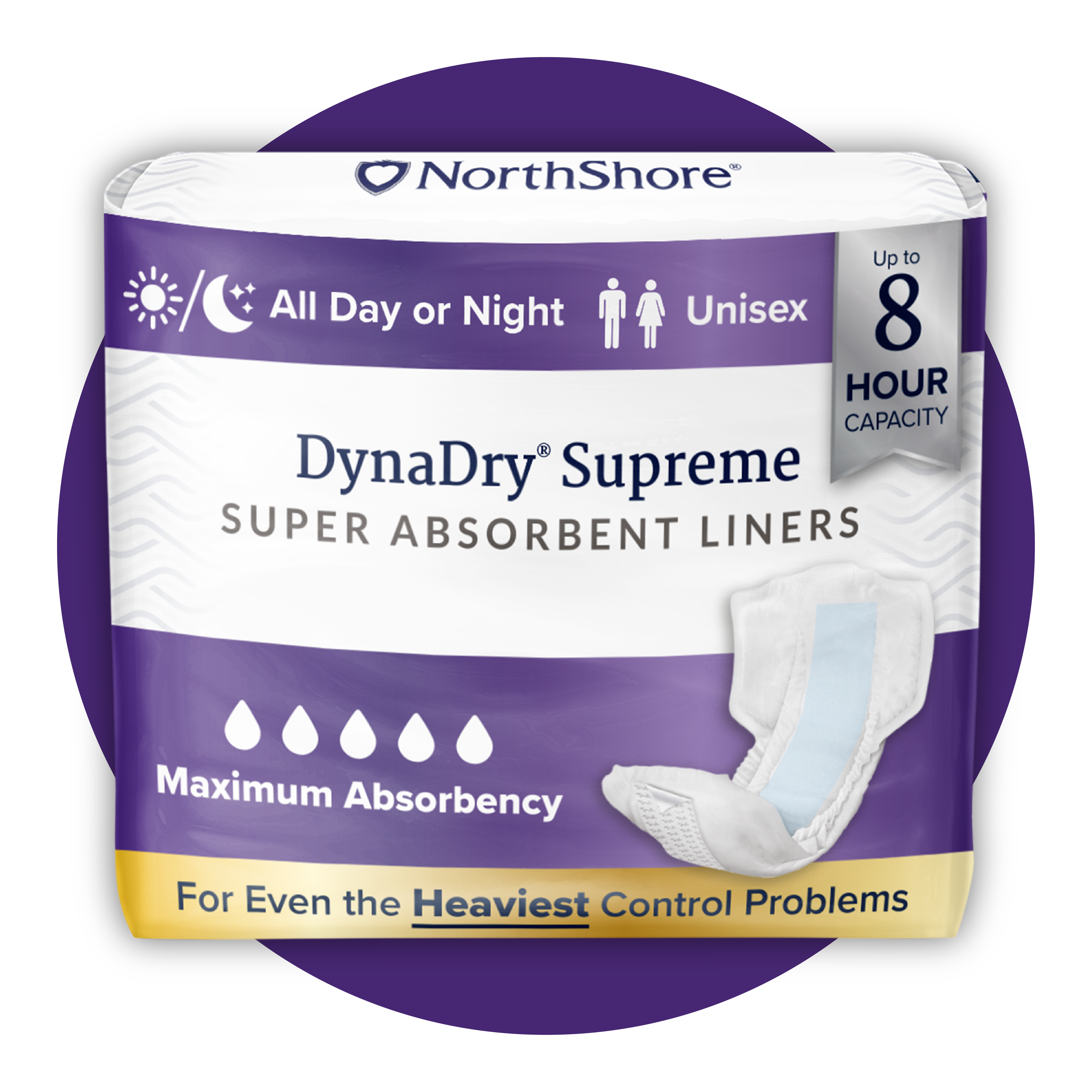
For light, occasional leaks:
Incontinence liners, bladder pads, and guards worn inside regular underwear offer a slim, low-bulk option. NorthShore's DynaDry Supreme unisex liners work well for light-to-moderate urinary or bowel leaks, while DoubleStop male guards stop dribbles and heavier leaks for men.
Incontinence liners, bladder pads, and guards worn inside regular underwear offer a slim, low-bulk option. NorthShore's DynaDry Supreme unisex liners work well for light-to-moderate urinary or bowel leaks, while DoubleStop male guards stop dribbles and heavier leaks for men.
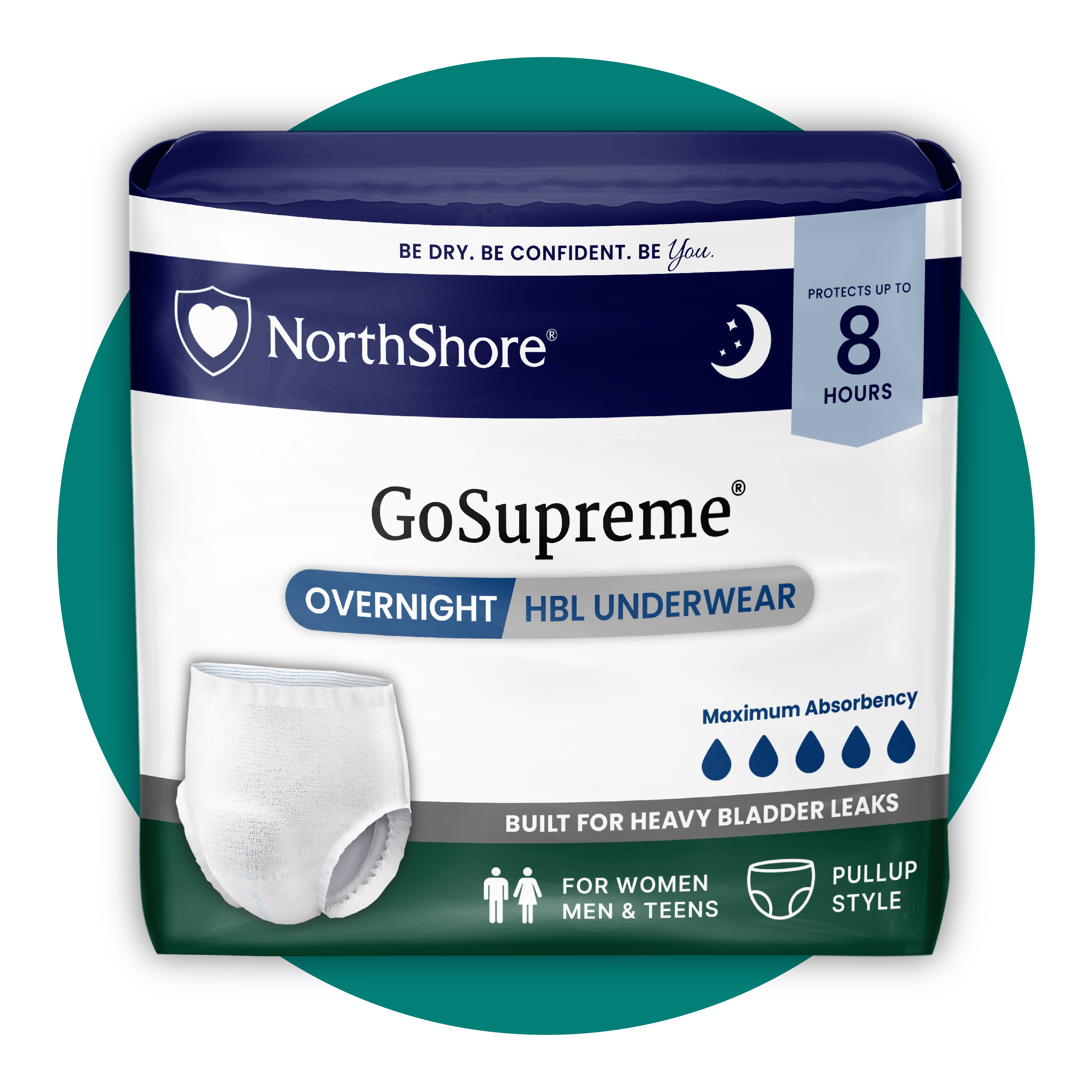
For heavier leaks and active lifestyle:
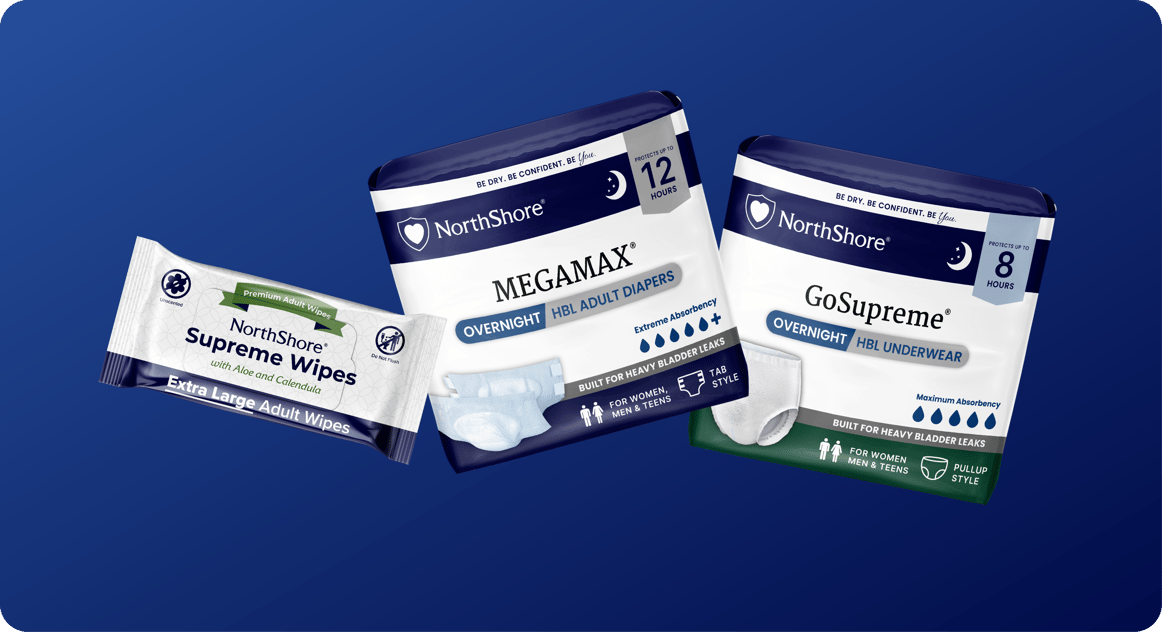
Pull-up style underwear, such as NorthShore's GoSupreme and GoSupreme Max, slip on and off like regular underwear, with breathable, high-absorbency protection through active days and overnight.
Pull-up style underwear, such as NorthShore's GoSupreme and GoSupreme Max, slip on and off like regular underwear, with breathable, high-absorbency protection through active days and overnight.
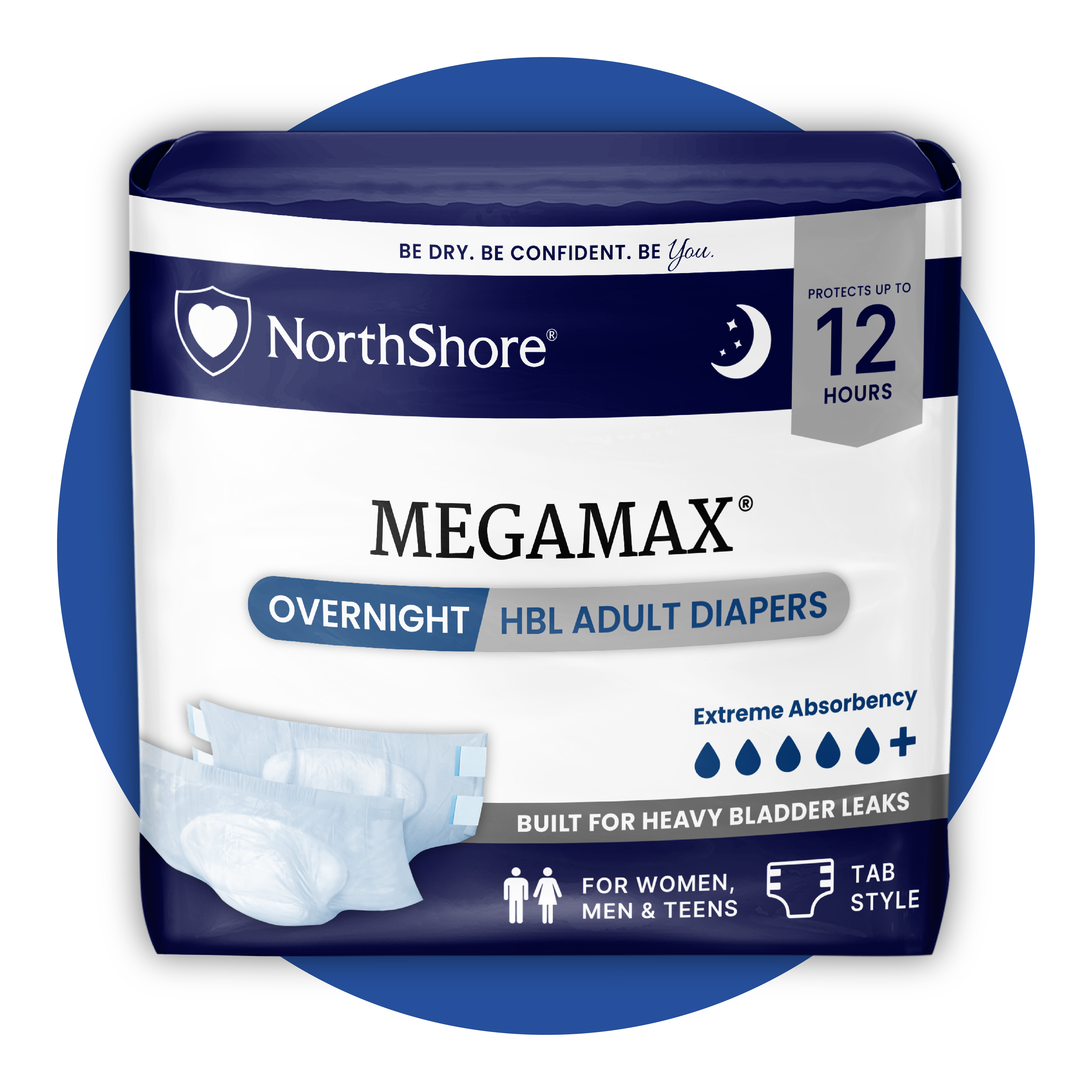
For heavy leaks, overnight protection, or caregiving situations:
Tab-style adult diapers, such as NorthShore's MegaMax, offer up to 12 hours of protection and refastenable tabs that make adjustments and changes easier, particularly for caregivers or anyone with limited mobility.
Tab-style adult diapers, such as NorthShore's MegaMax, offer up to 12 hours of protection and refastenable tabs that make adjustments and changes easier, particularly for caregivers or anyone with limited mobility.
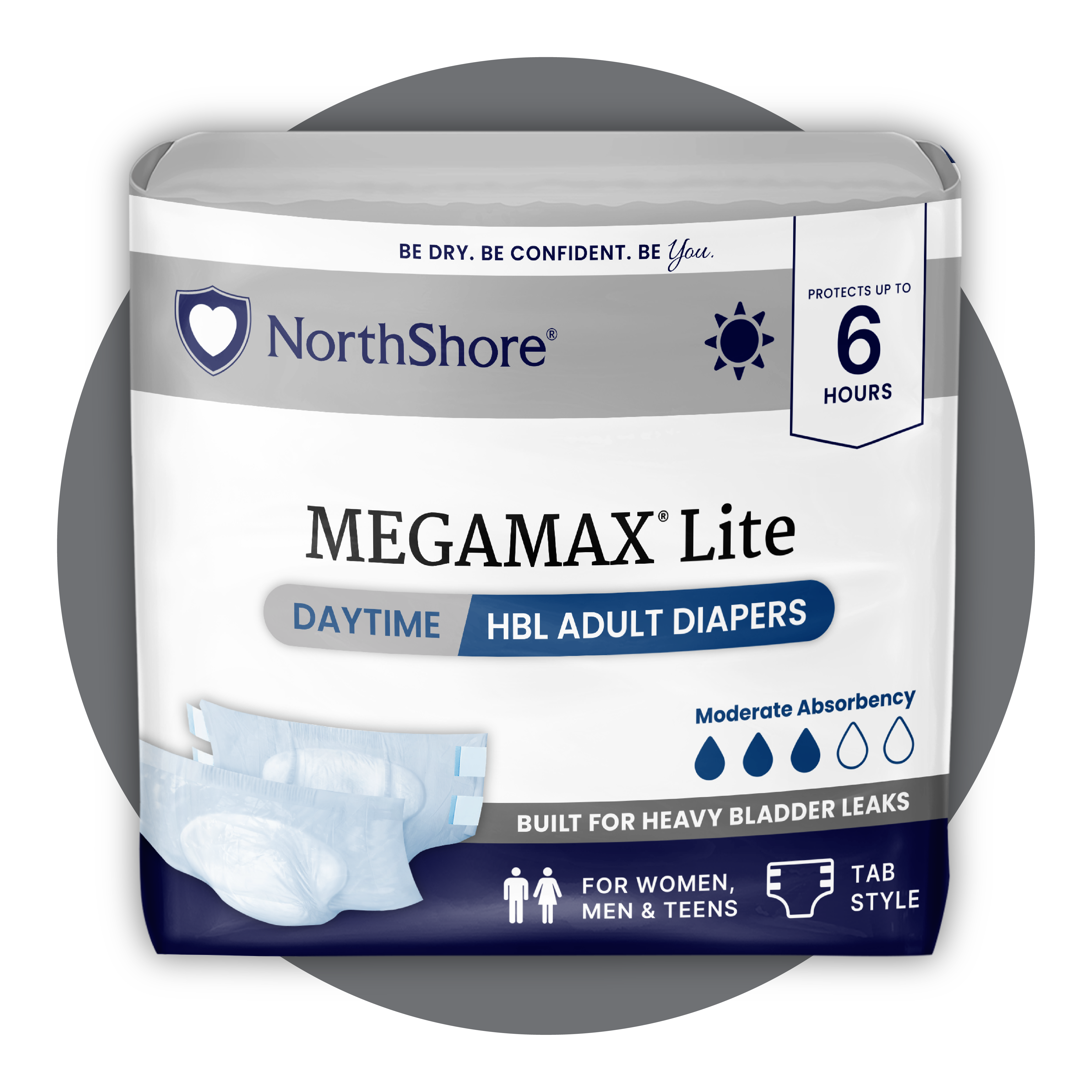
For bowel incontinence:
Look for extra rear coverage, tall leak guards, and strong odor control. NorthShore's MegaMax Lite (tab-style adult diaper), and DynaDry Supreme (incontinence liner) are all unisex products built to provide secure protection.
Look for extra rear coverage, tall leak guards, and strong odor control. NorthShore's MegaMax Lite (tab-style adult diaper), and DynaDry Supreme (incontinence liner) are all unisex products built to provide secure protection.
An immediate change is required after a bowel movement.
Care essentials worth adding:
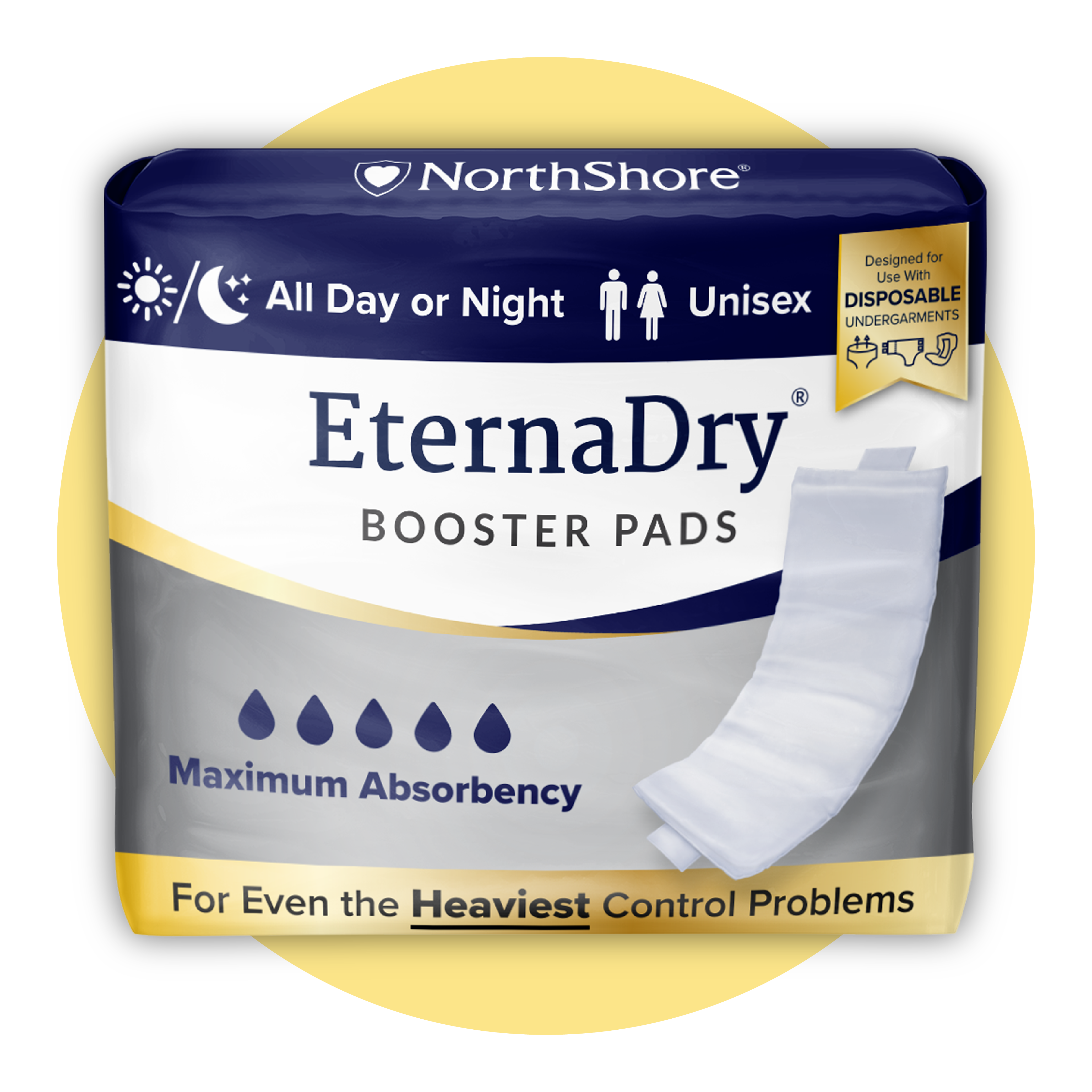
Booster pads like EternaDry extend the time between changes by adding absorbency inside a tab-style adult diaper or pull-up style underwear. Supreme Quilted Cleansing Wipes are extra-large, hypoallergenic, and premoistened for thorough cleansing at every change. DiscreetShield Disposal Bags are opaque and lightly scented, great for discreet disposal of soiled products.
Booster pads like EternaDry extend the time between changes by adding absorbency inside a tab-style adult diaper or pull-up style underwear. Supreme Quilted Cleansing Wipes are extra-large, hypoallergenic, and premoistened for thorough cleansing at every change. DiscreetShield Disposal Bags are opaque and lightly scented, great for discreet disposal of soiled products.
For a deeper, step-by-step breakdown of product types and how to match them to a routine, see NorthShore's guide to how to choose the right adult diaper.

The right product only works if it fits correctly. A product that's too loose can leak at the legs; one that's too tight can compress the absorbent core and irritate skin.
The most reliable method is to measure both the waist (at or just below the belly button) and the hips (at the fullest point), then use the larger of the two measurements to select a size from the product's sizing chart. Weight-based sizing can be a helpful secondary reference, but body measurements tend to be more accurate, since two people at the same weight can carry it very differently. For complete measuring instructions, size charts, and guidance for less standard body types, see NorthShore's Adult Diaper Sizing Guide.
-
 “No one has to figure this out alone”NorthShore Care Experts are real people, available seven days a week by call, text, or chat. They have heard every question, so there is nothing too personal to ask. Get expert-picked product recommendations for your situation, judgment-free, and they can even place a free sample order.
Managing incontinence can feel isolating, but there is plenty of help available for those managing it and those caring for someone who is, whether that means talking to a doctor, connecting with others navigating the same thing, or taking the guesswork out of finding the right products.
Healthcare Providers
The best starting point for a diagnosis, a treatment plan, and answers specific to individual health history. Primary care providers, urologists, urogynecologists, and gastroenterologists (for bowel-related symptoms) all treat incontinence regularly.

Community Resources
Organizations such as the National Association for Continence (NAFC) offer additional education, symptom trackers, and forums for connecting with others managing similar experiences. NorthShore maintains a directory of incontinence support organizations covering a range of conditions and caregiving situations.

NorthShore Care Experts
Real people, available seven days a week by call, text, or chat at 800-563-0161, offering judgment-free guidance on products, sizing, and getting started. They can also help place a free sample order directly.

NorthShore Hero Club
A community of customers who have shared their own stories of managing incontinence, from caregivers to veterans to people newly diagnosed, as a way of reducing the isolation that so often surrounds the topic. Read customer stories, and when ready, share your own.

Free Sample Program
Try Up to 6 Free Samples Before You Commit
A quick, 4-question quiz matches personalized recommendations, delivered in a discreet, unmarked box. Orders placed by 7pm Central ship the same day (shipping charges apply).
Sources
- National Association For Continence (NAFC). We Count: Urinary Incontinence Facts. nafc.org/we-count/
- National Institute of Diabetes and Digestive and Kidney Diseases (NIDDK). Urinary Incontinence in Adults. niddk.nih.gov
- National Institute of Diabetes and Digestive and Kidney Diseases (NIDDK). Bowel Control Problems (Fecal Incontinence). niddk.nih.gov
- Mayo Clinic. Urinary incontinence — Symptoms and causes. mayoclinic.org
- PDG Insights. NorthShore-commissioned consumer research on incontinence product experience (n=418, April–May 2026).
Access your List
Please login to access your saved items list. If you don't have an account, create one today to start your list.
Connect on social:


Top